Category: Agronomic Intelligence

  • Africa’s Food Systems Shift Beyond Poultry Into Scalable Innovation
    Africa’s Food Systems Shift Beyond Poultry Into Scalable Innovation

    A deeper transformation is underway across Africa’s food systems, one that extends far beyond poultry and into the structural redesign of how food is produced, financed, processed, and delivered. While poultry remains a visible entry point, the more significant story lies in how multiple agricultural value chains are being rebuilt simultaneously through technology, capital deployment, and decentralized infrastructure.

    Consider the rapid emergence of solar powered irrigation across East Africa. Over the past five years, installations have grown by more than 40 percent annually, according to regional development finance estimates. Smallholder farmers who previously relied on unpredictable rainfall are now achieving yield increases of 2 to 3 times per season. In Kenya alone, solar irrigation systems have reduced water access costs by up to 60 percent, while enabling year round production for high value crops such as tomatoes, onions, and leafy vegetables. This is not just productivity improvement. It is a shift from subsistence to market oriented agriculture.

    Parallel to this, decentralized storage is solving one of Africa’s most expensive inefficiencies. Post harvest losses still account for 30 to 50 percent of total production across Sub Saharan Africa. Cold storage startups are addressing this through modular, pay as you store systems placed directly within farming communities. Farmers using these systems report income increases of 20 to 35 percent due to reduced spoilage and the ability to time market entry. The implication is straightforward. Storage is no longer a passive function. It is an active pricing strategy.

    Financial innovation is also moving beyond traditional credit models. Warehouse receipt systems and embedded finance platforms are unlocking liquidity at scale. Farmers deposit produce in certified storage facilities and receive digital receipts that can be used as collateral. This model has expanded by over 25 percent across East and West Africa since 2020, unlocking millions in working capital without requiring land titles or fixed assets. For agribusinesses, this reduces supply volatility. For farmers, it eliminates distress sales.

    Mechanization is following a similar trajectory. Asset sharing platforms for tractors and harvesters are reducing access costs by up to 70 percent compared to ownership. In countries like Nigeria and Tanzania, smallholders can now book machinery via mobile platforms, paying per acre rather than upfront capital expenditure. This has increased land utilization rates and reduced planting delays, which are often responsible for yield losses of 10 to 20 percent.

    Even input systems are being restructured. Biofertilizer adoption is increasing at an annual rate exceeding 15 percent across parts of West and East Africa. These inputs improve soil health while reducing dependence on imported synthetic fertilizers, whose prices surged by more than 60 percent between 2021 and 2023. Early adopters report yield stability improvements and input cost reductions of up to 30 percent over multiple planting cycles.

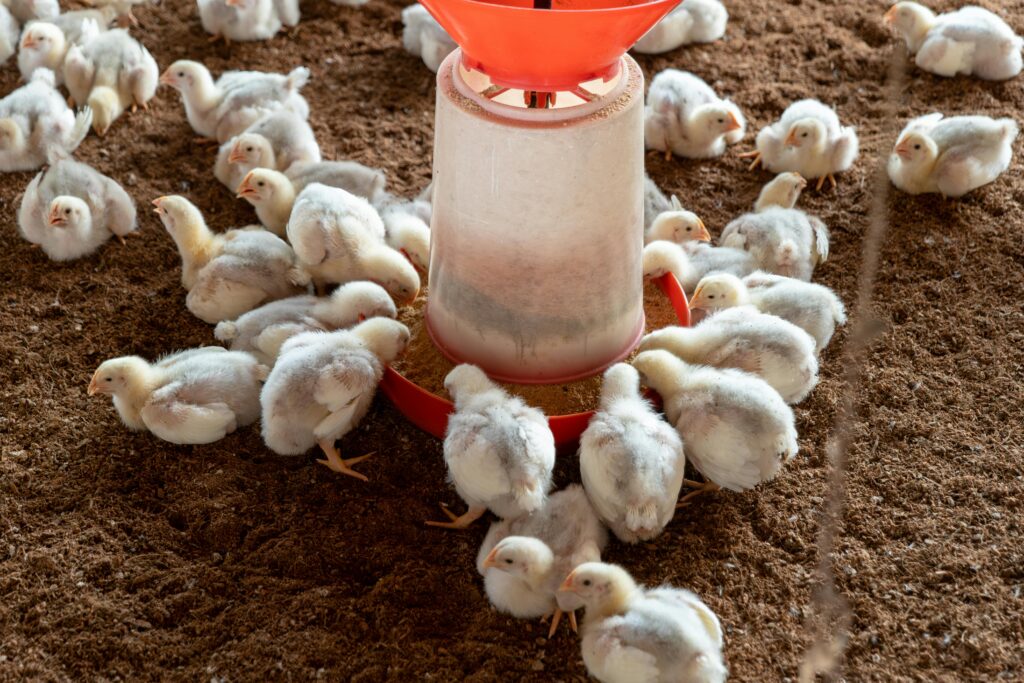
    Against this broader backdrop, poultry remains a high demand sector with structural inefficiencies. Africa hosts approximately 2.4 billion chickens, yet only about 30 percent of consumption is supplied locally. Feed costs still account for 60 to 70 percent of production expenses, and disease outbreaks such as Newcastle disease can wipe out up to 90 percent of unvaccinated flocks. These constraints explain why imports continue to dominate urban markets despite strong local demand.

    What is changing is the system around the farmer. Platforms that integrate financing, input access, and market linkages are converting fragmented operations into coordinated enterprises. In result, mortality rates decline, cost structures stabilize, and revenue predictability improves. The critical insight is this. Africa’s agricultural future will not be defined by a single breakthrough in one value chain. It will be determined by how effectively multiple innovations are layered together to remove friction across the entire system. Poultry illustrates the challenge. The broader ecosystem reveals the solution.

  • Integrated Climate Policy Systems in Agriculture for Functional Alignment
    Integrated Climate Policy Systems in Agriculture for Functional Alignment

    Climate Policy Integration in African Agricultural Systems

    Comparative system efficiency analysis across fragmented and integrated policy architectures, with emphasis on implementation performance and field level translation.

    Agriculture in Sub Saharan Africa operates under a dual pressure regime. It is a primary livelihood system for over 60 percent of the workforce and a material contributor to emissions when land use change is included. Estimates from the World Bank and the African Development Bank between 2022 and 2024 place agricultural related emissions at approximately 20 to 30 percent of total regional greenhouse gases. This creates a governance challenge where productivity, adaptation, and mitigation must be solved simultaneously within the same system.

    The central constraint is not policy absence. It is systemic fragmentation. Climate policy, agricultural strategy, land governance, and financial architecture frequently function as independent domains. This produces coordination failure at implementation level, where farmers experience policies as disconnected instruments rather than a unified operational framework.

    Incentive Architecture and Behavioral Adoption Dynamics

    Smallholder decision systems are dominated by short horizon economic signals. Evidence from World Bank supported programs between 2021 and 2024 indicates that adoption of climate smart agriculture increases by 40 to 70 percent when incentives are directly tied to measurable outcomes. Without immediate financial alignment, practices such as agroforestry, soil restoration, and efficient irrigation remain under adopted despite long term productivity gains.

    Incentive Elasticity of Climate Smart Agriculture Adoption

    Modeled relationship between financial incentive strength and smallholder adoption probability across climate smart interventions.

    Land Tenure, Carbon Rights, and Market Exclusion

    A structural barrier exists in property rights architecture. Across many African agricultural systems, more than 60 percent of smallholders operate without formal land documentation. This restricts access to credit markets and excludes participation in carbon finance mechanisms.

    Land Tenure Formalization and Market Access Structure

    Distribution of tenure security status and its structural implications for credit access, investment participation, and climate finance eligibility across smallholder systems.

    Delivery Systems and Transaction Cost Reduction

    Fragmented service delivery remains a primary inefficiency driver. Extension services, input financing, and market access programs are often delivered through separate institutional channels. This increases transaction costs and reduces participation rates. Integrated delivery models that bundle services into unified platforms demonstrate significantly stronger outcomes. Across pilot programs in Sub Saharan Africa, productivity gains range between 30 and 50 percent, while income increases range between 20 and 80 percent depending on crop systems and market integration depth.

    Integrated vs Fragmented Agricultural Delivery Systems

    Comparative productivity outcomes across service delivery architectures, reflecting differences in coordination, input bundling, financing access, and extension efficiency.

    Institutional Coordination and System Coherence

    Policy effectiveness depends on inter ministerial coordination. Agriculture, environment, finance, and energy ministries often operate under misaligned incentive structures. Countries that establish coordination platforms demonstrate higher implementation efficiency and faster rollout of climate interventions. The key variable is not policy design quality. It is synchronization capacity across institutions that control complementary inputs into the agricultural system.

    Feedback Loops and Data Driven Policy Adaptation

    Static policy frameworks degrade under climate volatility. Continuous feedback systems are required to maintain relevance. Digital extension platforms, satellite monitoring systems, and farmer reporting networks provide real time data on adoption barriers, yield performance, and input efficiency.

    Policy Adaptation Through Feedback Loop Systems

    Comparative analysis of policy effectiveness under static governance, periodic review cycles, and real time adaptive feedback architectures.

    Climate shocks currently reduce agricultural productivity by approximately 10 to 20 percent in vulnerable regions. At the same time, food demand is projected to increase by more than 50 percent by 2050. Without integrated policy systems, this divergence widens into structural food insecurity. Policy integration functions as infrastructure rather than administration. It determines whether climate strategies translate into operational change at farm level. The decisive variable is coherence across incentives, rights, delivery systems, and data feedback mechanisms. The trajectory is unambiguous. Agricultural resilience depends on policy systems that behave as unified operating architectures rather than isolated regulatory instruments.

  • Precision Farming Over Instincts End Costly Guesswork Across Africa
    Precision Farming Over Instincts End Costly Guesswork Across Africa

    Across Africa, farmers lose an estimated 68 billion dollars annually due to decision making based on guesswork. This is not a marginal inefficiency. It is a systemic failure in how agricultural decisions are made. Poor soil management alone reduces yields by 20 to 40 percent, while climate variability continues to distort planting cycles that farmers relied on for generations. First principles. Farming is a decision system under uncertainty. When inputs such as rainfall timing, soil nutrients, and pest patterns become unpredictable, output variability increases. The traditional model collapses because it relies on historical consistency that no longer exists.

    The consequences are measurable. Africa loses approximately 50 million tons of food each year, enough to feed about 200 million people. In parallel, price volatility intensifies. In Nigeria, maize prices surged from about 4 dollars per bag to nearly 50 dollars within a single cycle. For farmers operating below 2 dollars per day, one failed season creates immediate economic distress. Your real problem is not low productivity. It is low decision accuracy. Action is to replace intuition based farming with data driven precision systems.

    Also Read – Agricultural Resilience Trends in Namibia, Tunisia, and Côte d’Ivoire

    This transition is already underway. Companies such as Rural Farmers Hub are redefining how farmers interact with their land. Their model converts satellite and soil data into visual intelligence. Farms are segmented into zones using color coded mapping. Green signals optimal health. Yellow indicates moderate stress. Red highlights critical deficiencies. The mechanism is simple but powerful. Instead of treating a farm as a uniform unit, each section receives targeted intervention. Fertilizer application becomes precise. Input costs decline. Yield consistency improves.

    Quantified impact confirms this. Farmers using these systems reduce input costs by 15 to 30 percent while increasing yields by 20 to 50 percent. Rural Farmers Hub has already trained over 140000 farmers and conducted soil analysis across more than 31000 farms. That scale demonstrates both demand and viability. The second layer of transformation moves beyond soil into predictive intelligence. Tolbi extends the model by forecasting yields, monitoring water levels, and optimizing harvest timing. This shifts farming from reactive to anticipatory.

    Weak point in traditional agriculture is timing uncertainty. Fix is predictive modeling using integrated data streams. Satellite imaging, weather forecasting, and sensor data converge into actionable insights. Farmers know not only what to plant, but when to harvest, how much labor to allocate, and how to manage storage. The economic implications are direct. When farmers can predict output volumes, they negotiate better prices, reduce post harvest losses, and optimize logistics. Precision reduces variance, and reduced variance stabilizes income.

    This is not incremental improvement. It is a structural shift toward precision agriculture. Historically, these tools were limited to large scale commercial farms due to cost barriers. That constraint is collapsing. Mobile based delivery models and local agent networks are making advanced analytics accessible to smallholders. Climate change accelerates this transition. Rainfall patterns across regions such as Kenya, Ghana, and Nigeria have shifted significantly over the past decade. According to recent regional climate assessments, rainfall variability has increased by more than 15 percent in key agricultural zones since 2020. Traditional planting calendars are no longer reliable.

    Specify exactly what success looks like. Reduce decision error rates by at least 50 percent within two seasons. Increase yield per hectare by a minimum of 25 percent. Cut unnecessary input usage by 20 percent. Ensure that at least 60 percent of farmers in a target region adopt data driven planning tools. Immediate action is clear. Identify one farming cluster. Deploy soil mapping and predictive tools. Train farmers on interpretation, not just access. Track yield, cost, and income metrics across two cycles. Scale only if performance thresholds are met.

    Defining Success: Adoption Metrics

    Target Threshold for Data-Driven Planning Tools

    60% Adoption
    Target Farmers (Active)
    Pending Adoption

    The trajectory is already defined. Farmers are transitioning from uncertainty to visibility. Data is becoming the most critical input in agriculture, more decisive than fertilizer or rainfall. The future of African farming will not be determined by who owns the most land. It will be determined by who understands it best.