
Category: Carbon Project Infrastructure

  • Integrated Climate Policy Systems in Agriculture for Functional Alignment

    Integrated Climate Policy Systems in Agriculture for Functional Alignment

    Climate Policy Integration in African Agricultural Systems

    Comparative system efficiency analysis across fragmented and integrated policy architectures, with emphasis on implementation performance and field level translation.

    Agriculture in Sub Saharan Africa operates under a dual pressure regime. It is a primary livelihood system for over 60 percent of the workforce and a material contributor to emissions when land use change is included. Estimates from the World Bank and the African Development Bank between 2022 and 2024 place agricultural related emissions at approximately 20 to 30 percent of total regional greenhouse gases. This creates a governance challenge where productivity, adaptation, and mitigation must be solved simultaneously within the same system.

    The central constraint is not policy absence. It is systemic fragmentation. Climate policy, agricultural strategy, land governance, and financial architecture frequently function as independent domains. This produces coordination failure at implementation level, where farmers experience policies as disconnected instruments rather than a unified operational framework.

    Incentive Architecture and Behavioral Adoption Dynamics

    Smallholder decision systems are dominated by short horizon economic signals. Evidence from World Bank supported programs between 2021 and 2024 indicates that adoption of climate smart agriculture increases by 40 to 70 percent when incentives are directly tied to measurable outcomes. Without immediate financial alignment, practices such as agroforestry, soil restoration, and efficient irrigation remain under adopted despite long term productivity gains.

    Incentive Elasticity of Climate Smart Agriculture Adoption

    Modeled relationship between financial incentive strength and smallholder adoption probability across climate smart interventions.

    Land Tenure, Carbon Rights, and Market Exclusion

    A structural barrier exists in property rights architecture. Across many African agricultural systems, more than 60 percent of smallholders operate without formal land documentation. This restricts access to credit markets and excludes participation in carbon finance mechanisms.

    Land Tenure Formalization and Market Access Structure

    Distribution of tenure security status and its structural implications for credit access, investment participation, and climate finance eligibility across smallholder systems.

    Delivery Systems and Transaction Cost Reduction

    Fragmented service delivery remains a primary inefficiency driver. Extension services, input financing, and market access programs are often delivered through separate institutional channels. This increases transaction costs and reduces participation rates. Integrated delivery models that bundle services into unified platforms demonstrate significantly stronger outcomes. Across pilot programs in Sub Saharan Africa, productivity gains range between 30 and 50 percent, while income increases range between 20 and 80 percent depending on crop systems and market integration depth.

    Integrated vs Fragmented Agricultural Delivery Systems

    Comparative productivity outcomes across service delivery architectures, reflecting differences in coordination, input bundling, financing access, and extension efficiency.

    Institutional Coordination and System Coherence

    Policy effectiveness depends on inter ministerial coordination. Agriculture, environment, finance, and energy ministries often operate under misaligned incentive structures. Countries that establish coordination platforms demonstrate higher implementation efficiency and faster rollout of climate interventions. The key variable is not policy design quality. It is synchronization capacity across institutions that control complementary inputs into the agricultural system.

    Feedback Loops and Data Driven Policy Adaptation

    Static policy frameworks degrade under climate volatility. Continuous feedback systems are required to maintain relevance. Digital extension platforms, satellite monitoring systems, and farmer reporting networks provide real time data on adoption barriers, yield performance, and input efficiency.

    Policy Adaptation Through Feedback Loop Systems

    Comparative analysis of policy effectiveness under static governance, periodic review cycles, and real time adaptive feedback architectures.

    Climate shocks currently reduce agricultural productivity by approximately 10 to 20 percent in vulnerable regions. At the same time, food demand is projected to increase by more than 50 percent by 2050. Without integrated policy systems, this divergence widens into structural food insecurity. Policy integration functions as infrastructure rather than administration. It determines whether climate strategies translate into operational change at farm level. The decisive variable is coherence across incentives, rights, delivery systems, and data feedback mechanisms. The trajectory is unambiguous. Agricultural resilience depends on policy systems that behave as unified operating architectures rather than isolated regulatory instruments.
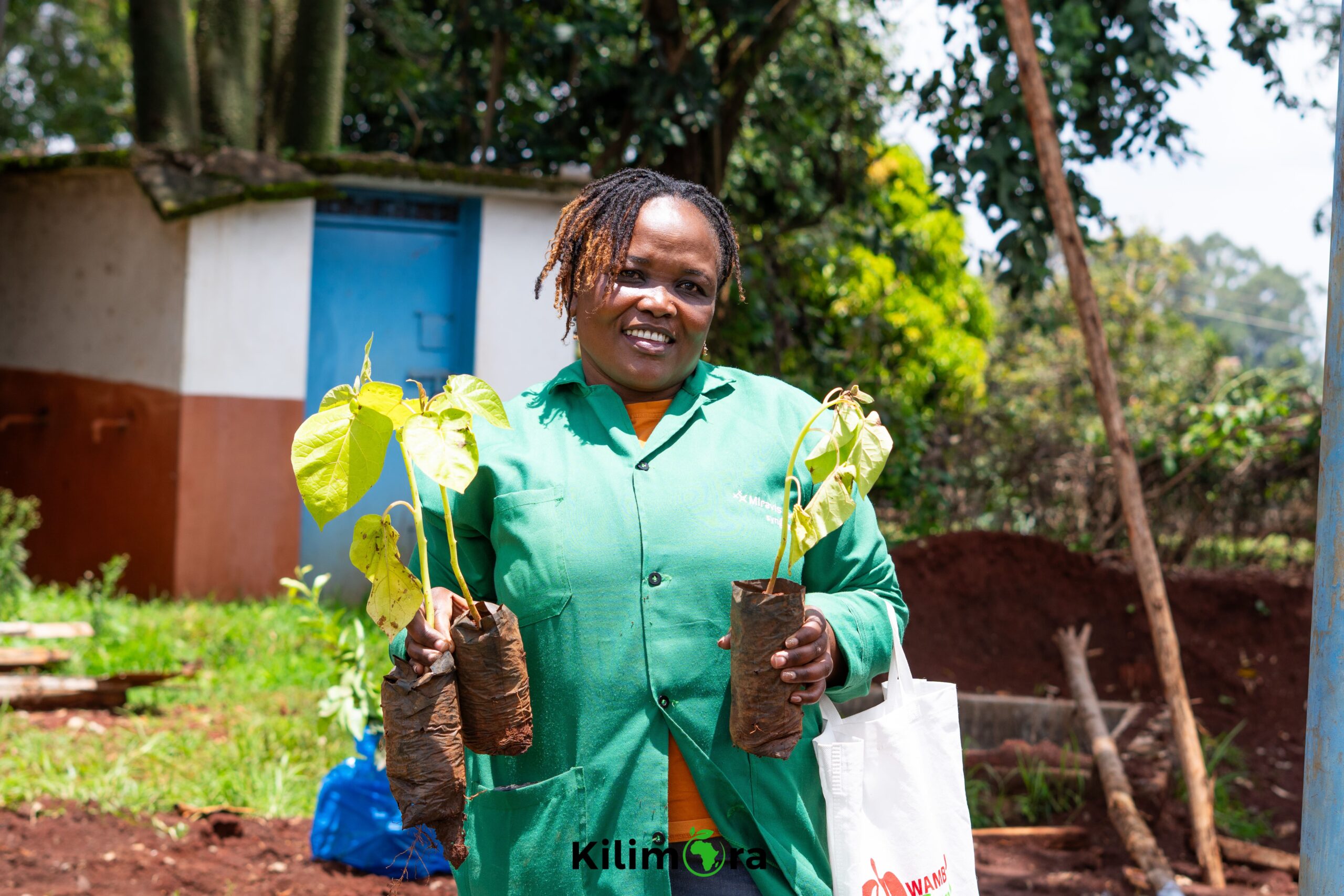
  • Agroforestry as a System of Production, Carbon, and Income Architecture

    Agroforestry as a System of Production, Carbon, and Income Architecture

    Agriculture in Sub Saharan Africa operates under a dual constraint system defined by productivity pressure and climate instability. Agroforestry emerges as a systems level intervention that integrates perennial woody biomass into annual cropping systems, thereby modifying biophysical, economic, and climatic performance variables simultaneously. This is not a diversification strategy in the conventional sense. It is a redesign of land use function.

    Empirical synthesis from the World Bank, Food and Agriculture Organization, and African Development Bank between 2022 and 2024 indicates that well managed agroforestry systems can increase long term yield stability and productivity by approximately 20 percent to 50 percent depending on crop type, tree density, and agro ecological zone. These gains are primarily driven by nitrogen fixation, organic matter accumulation, and microclimate stabilization effects.

    Biophysical Mechanisms and Soil System Reconstitution

    The productivity differential is structurally linked to soil system restoration processes. Tree based systems increase soil organic carbon, improve cation exchange capacity, and enhance microbial activity. Peer reviewed agronomic studies across East and West Africa indicate soil moisture retention improvements ranging between 15 percent and 35 percent in agroforestry systems compared to conventional monocropping. Fertilizer substitution effects are also measurable. Synthetic fertilizer dependency declines in systems incorporating nitrogen fixing species, with observed reductions in input costs reaching 20 percent to 40 percent in mature systems. This is particularly significant given that fertilizer price volatility in African markets increased by more than 60 percent between 2021 and 2023 according to regional commodity tracking reports.

    Carbon Sequestration as a Measurable Economic Variable

    Agroforestry functions as both a production system and a carbon sink architecture. Carbon sequestration rates vary by species composition and management intensity, but commonly fall within a range of 2 to 10 tonnes of COâ‚‚ equivalent per hectare per year. This positions agroforestry as a quantifiable climate asset class rather than a qualitative sustainability practice. At scale, aggregated sequestration potential contributes meaningfully to national land use, land use change, and forestry targets under climate reporting frameworks. However, monetization remains constrained by measurement infrastructure, land tenure clarity, and carbon rights definition.

    Deforestation Pressure and Substitution Effects

    Deforestation accounts for approximately 10 percent to 15 percent of total greenhouse gas emissions in multiple Sub Saharan African countries according to FAO land use assessments between 2022 and 2024. Agroforestry directly mitigates this pressure through substitution of forest derived resources such as fuelwood, fodder, and timber. The substitution effect operates through decentralized production of biomass resources within farm boundaries, reducing extraction intensity from natural forest systems. This creates a structural decoupling between rural energy needs and forest degradation.

    Income Diversification and Household Economic Stabilization

    Smallholder farmers, representing over 70 percent of the agricultural workforce in Africa, experience significant income volatility due to climate and price shocks. Agroforestry introduces secondary and tertiary income streams derived from fruit, timber, medicinal products, and fodder systems. Empirical field studies across East Africa indicate that tree based products can contribute between 10 percent and 30 percent of total household agricultural income depending on system maturity and species selection.

    Hydrological Stability and Climate Adaptation Functions

    Agroforestry systems materially alter hydrological behavior at the plot level. Tree root structures increase infiltration rates and reduce surface runoff. Field level studies indicate erosion reduction of up to 50 percent in sloped agricultural landscapes. During precipitation variability events, farms with tree integration demonstrate higher yield resilience due to moderated evapotranspiration rates and improved soil moisture buffering capacity.

    Adoption Constraints and System Scaling Dynamics

    Despite strong biophysical and economic evidence, adoption remains constrained by upfront capital requirements, delayed return cycles, and technical knowledge gaps. Tree maturation cycles introduce temporal mismatches between investment and payoff, typically ranging from 3 to 7 years depending on species. However, structured implementation models that combine extension services, input provisioning, and market linkage support have demonstrated adoption rates exceeding 60 percent in targeted pilot regions according to regional development program evaluations.

    Agroforestry functions as a multi dimensional infrastructure system that simultaneously addresses production efficiency, climate mitigation, income diversification, and ecological stabilization. Its value is not additive. It is multiplicative across soil, carbon, water, and income systems. The evidence base indicates that agroforestry is not a complementary agricultural practice. It is a foundational redesign of agricultural systems in Sub Saharan Africa with direct implications for productivity trajectories, climate resilience architecture, and rural economic transformation. Its constraint is not agronomic validity. Its constraint is system level scaling capacity.