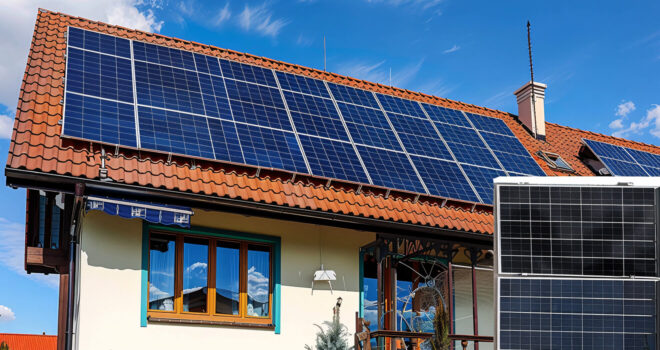
The economics of solar energy in Sub Saharan Africa have undergone a structural repricing over the last decade. This shift is not marginal. It represents a transition from subsidy dependent access models to market viable distributed energy systems. More than 55 percent of rural households in Sub Saharan Africa remain outside national grids according to International Energy Agency 2023 estimates, with agricultural zones facing the highest exposure due to productive energy demand requirements rather than basic consumption alone.
Between 2014 and 2024, solar photovoltaic module costs declined by over 80 percent while battery storage costs fell by approximately 60 percent, based on multi year energy transition datasets compiled by the World Bank and International Renewable Energy Agency. This cost compression has redefined entry points for both household and productive use systems.
Structural Decline in Solar Technology Costs (2014 to 2024)
Comparative reduction in capital cost components across photovoltaic modules and battery storage systems, based on multi source estimates from World Bank and IRENA energy transition datasets.
Capital Cost Compression and System Affordability Thresholds
The reduction in component costs has directly translated into lower system pricing across household and productive energy segments. Basic solar home systems that previously ranged between 600 and 800 dollars are now available between 150 and 300 dollars depending on configuration. Productive use systems for irrigation and processing have declined from over 5,000 dollars to a range between 1,500 and 3,500 dollars. This compression has shifted solar from a capital intensive infrastructure asset into a modular investment class accessible through incremental financing.
Capital Cost Transition Across Energy Use Case Archetypes (2014 to 2024)
Comparative evolution of system acquisition costs across household energy systems and productive use energy systems, reflecting global photovoltaic and storage cost deflation trends.
Adoption Dynamics and Pay As You Go Financing Structures
Off grid solar adoption in East Africa has expanded significantly over the last decade. Regional estimates indicate growth from below 10 percent of rural households in 2015 to over 30 percent in Kenya by 2024, with Tanzania and Uganda ranging between 15 and 25 percent depending on region and income segmentation. Pay as you go financing has been a central enabling mechanism. Typical structures involve a 10 to 20 percent upfront payment followed by daily or monthly instalments between 0.30 and 1.50 dollars. This aligns repayment schedules with agricultural cash flow cycles.
Expansion of Off Grid Solar Adoption Across East Africa
Comparative adoption trajectory illustrating structural market penetration shifts between baseline conditions and current regional performance levels.
Productive Use Energy and Agricultural Value Chain Effects
Energy access functions as a multiplier in agricultural systems rather than a standalone utility improvement. Solar powered irrigation systems can increase yields by a factor of 2 to 3 through extension of growing cycles into dry periods. Solar cold storage systems reduce post harvest losses, which currently range between 20 and 30 percent for perishable commodities. Solar powered milling and processing systems improve value capture within rural value chains.
Productive Use Impact on Agricultural Output
Policy Architecture and Market Acceleration Mechanisms
Across East Africa, policy frameworks are reinforcing solar adoption through fiscal and regulatory interventions. Kenya has eliminated VAT on solar equipment and introduced net metering provisions under the Energy Act, reducing system costs by up to 16 percent. Tanzania has deployed results based financing through the Rural Energy Agency to reduce end user costs. Uganda has implemented VAT exemptions alongside donor backed financing mechanisms. Rwanda has integrated off grid systems into its national electrification strategy targeting more than half of new connections through decentralized solutions. Ethiopia continues to scale subsidized solar distribution programs targeting rural access expansion.
Leave a Reply