A structural reordering is underway across African agriculture where capital, infrastructure, and policy are increasingly converging into one coordinated system. What previously operated as fragmented investments is now forming a coherent financing and production architecture with measurable implications for productivity, trade, and food security outcomes.
Capital Formation and Industrial Scale Agricultural Inputs
Large scale industrial investments are redefining input dependency across the continent. Fertilizer production is emerging as a strategic anchor for agricultural productivity due to its direct correlation with yield performance. The development of industrial fertilizer capacity led by Aliko Dangote in Ethiopia represents one of the largest agro input investments in the region. The planned output of approximately 3 million metric tonnes of urea annually aligns with regional demand deficits where import dependency exceeds 60 percent according to the African Development Bank.
Agricultural Financing Expansion and Capital Gaps
Agricultural finance remains the central constraint in system scaling. Despite increasing inflows, structural deficits persist across production and post harvest systems. The World Bank estimates an annual agricultural financing gap exceeding 180 billion USD in Sub Saharan Africa. Current capital inflows address only a fraction of system level demand. Nigeria’s adoption of structured financing mechanisms such as NIRSAL has enabled over 47 million USD in agribusiness lending, indicating early stage de risking of agricultural credit markets.
Trade Frictions and Regional Market Fragmentation
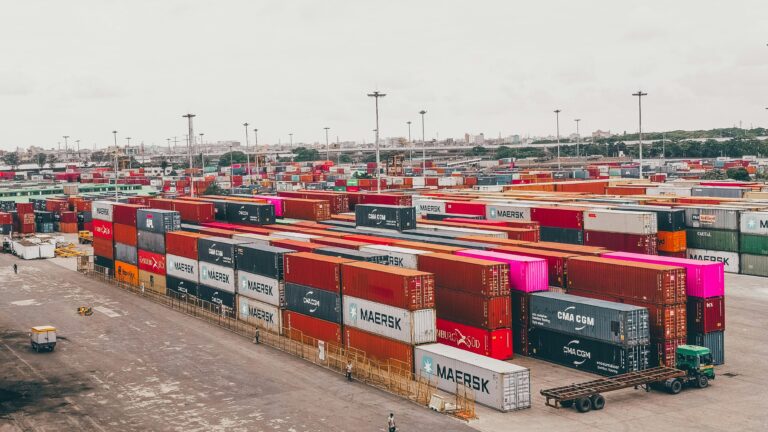
Intra African agricultural trade remains structurally underdeveloped. Only approximately 15 percent of agricultural trade occurs within the continent according to the International Monetary Fund. Disruptions such as import restrictions between South Africa and Namibia demonstrate the fragility of regional supply chains. Losses exceeding 1000 tonnes of produce highlight inefficiencies in phytosanitary alignment and cross border logistics.
Productivity Gains Through Supply Chain Integration
Productivity improvements are increasingly driven by integrated infrastructure rather than isolated interventions. Kenya, Tanzania, and Nigeria are demonstrating early stage convergence of production, processing, and distribution systems.
Agricultural Trade and Export Expansion Pathways
Export oriented agriculture is becoming a structural growth lever. Tanzania’s target of £1 billion in exports to the United Kingdom reflects a shift toward compliance driven trade expansion.
Agriculture across Africa is transitioning into a capital integrated system where productivity is increasingly determined by coordination efficiency rather than isolated interventions. The convergence of industrial input production, financing expansion, and trade alignment is producing measurable system level gains. The constraint is no longer conceptual design. It is execution coherence across institutions, markets, and infrastructure layers. Systems that achieve integration across these domains will determine regional competitiveness over the next decade.
Discover more from Kilimora
Subscribe to get the latest posts sent to your email.