In This Brief
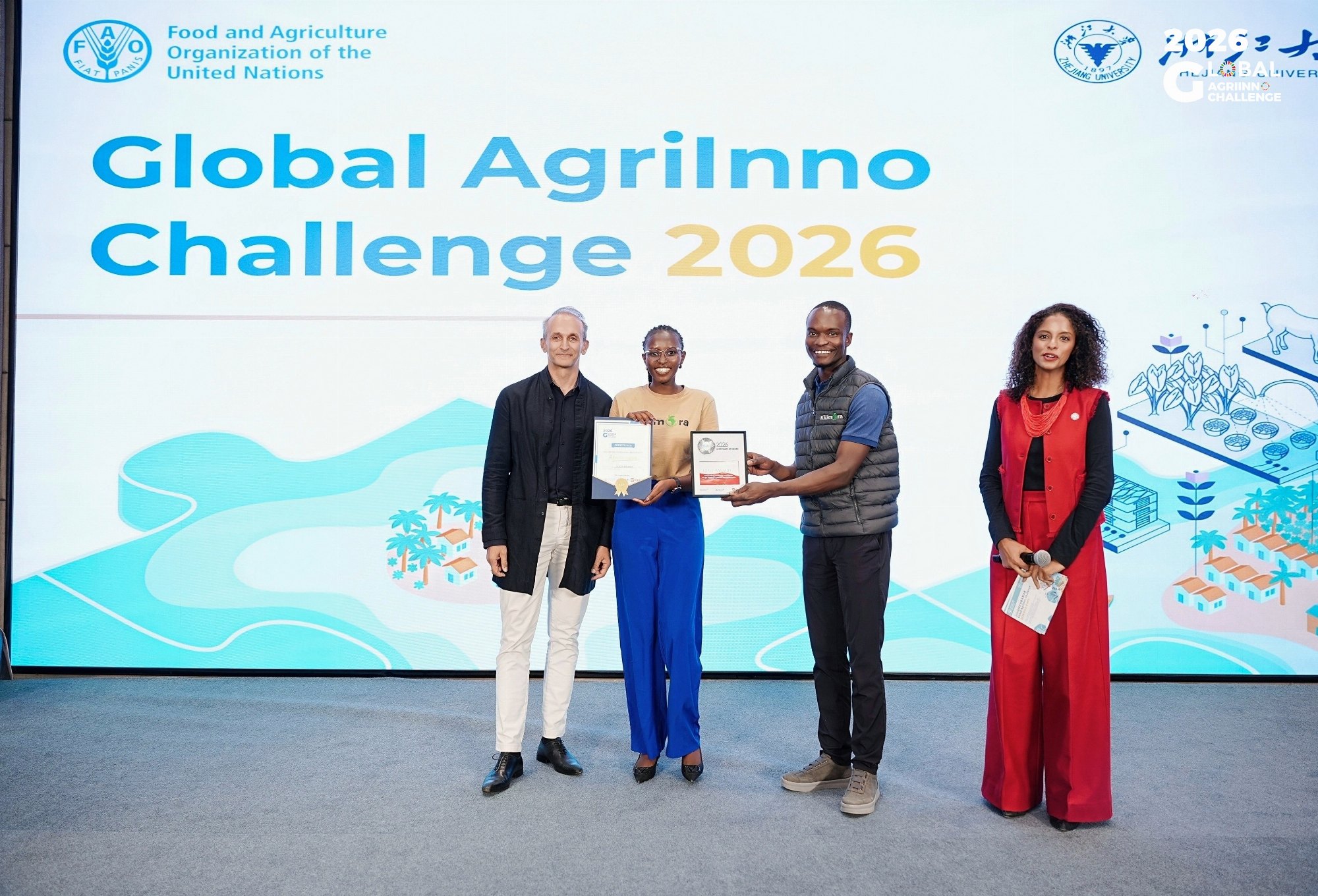
Kilimora's AgriKonnekt has won the Gold Award at the FAO backed Global AgriInno Challenge 2026. This brief covers the competition, the week of programming in Hangzhou, a study visit to an agricultural technology company and what the podium says about where young innovators see the gap.
On 10 September 2026 the Global AgriInno Challenge named its winners at a final pitch in Hangzhou, China. The Gold Award went to AgriKonnekt, developed by the Kenya based social enterprise Kilimora. Silver went to Berikanpreneur from Indonesia and Bronze to The C-SAC Caribbean Pilot from Grenada. FAO describes AgriKonnekt as a model that combines farmer training in regenerative agriculture with digital data collection, satellite monitoring, ecosystem restoration and market linkages, and that goes after a persistent barrier to climate finance: the cost and complexity of verifying environmental outcomes. It has engaged more than 2,000 smallholder farmers in Kenya.
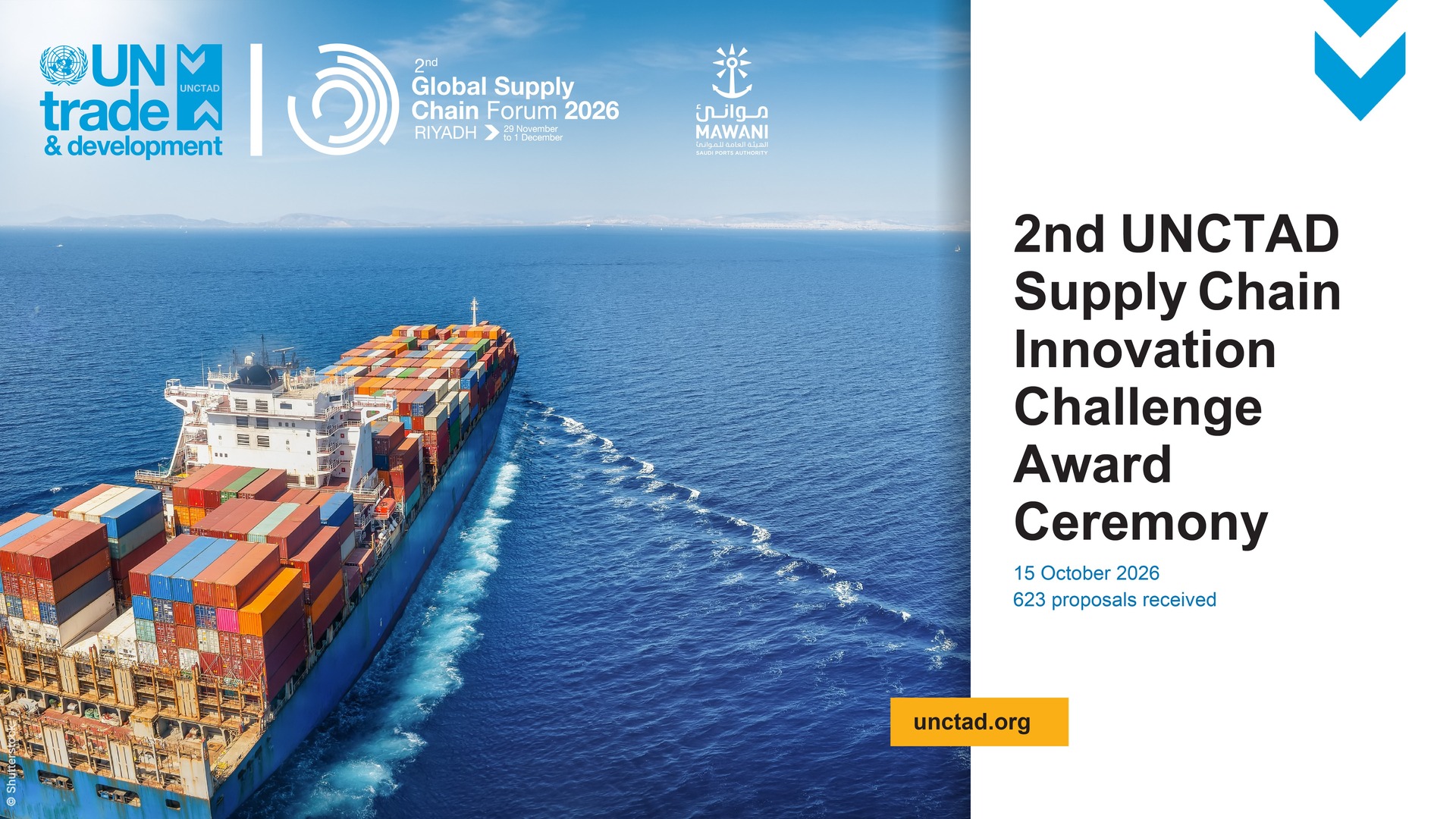
Kilimora has also been named winner of the Second UNCTAD Supply Chain Innovation Challenge with Cooperative Edge, which is the same idea seen from the supply chain side. The numbers behind the model, and the markets it aims at, are in the companion brief, Behind the Gold.
About the competition
The Global AgriInno Challenge is a youth led innovation competition run by FAO, Zhejiang University and Pinduoduo. It began in 2020, and across its first five editions it drew more than 1,900 applications from 108 countries. The 2026 edition is the sixth. Its theme was accelerating innovation for resilient agrifood systems in Small Island Developing States, with a global track and a dedicated track for island states. FAO anchors the Challenge in its work on digital public infrastructure and in SDG 1, SDG 2 and SDG 10, which cover poverty, hunger and inequality.
This year 191 teams applied and 137 applications were valid. Thirteen finalists, eight in the global track and five in the island track, travelled to Hangzhou for the Innovation for Good programme of workshops, study visits, sessions with experts and investors, and mentoring before the pitch. FAO also offered every finalist a place to showcase at its Science and Innovation Forum in Rome, and promised seed funding to the top teams.
The podium shows where innovators see the gap. AgriKonnekt documents what farmers do and links it to climate finance and markets. The C-SAC pilot pairs a verification system with a Climate Premium that ties documented outcomes to payments, and reports reaching around 3,000 smallholder farmers across more than four countries. Berikanpreneur turns low value bycatch fish into a shelf stable protein ingredient and builds its model around women from fishing households. Proof, price and participation run through all three.
Five days in Hangzhou
The Challenge is built as a programme, not a single pitch. Finalists arrived in Hangzhou on Sunday 6 September. Innovation for Good, the internal capacity building stage, ran from 7 to 9 September, and the public Pitch Event followed on 10 September. The organisers framed the five days as Connect, Learn, Explore, Refine and Showcase, and each day did a different job.
- 6 September, Connect. Registration, conference materials and hotel check in, with no formal programme so that teams could rest before the work began.
- 7 September, Learn. An opening by FAO and Zhejiang University, a team icebreaker, a session on startup DNA and growth strategy built on industry chain analysis, a Business Model Canvas workshop, a presentation on the challenges and opportunities for agricultural and food systems in Small Island Developing States, a case study of how an agriculture startup builds its business, and a welcome dinner for organisers, judges and teams.
- 8 September, Explore. An innovation tour at Zhejiang University, including a visit to the Nitrogen Robotics Lab and the Center for Future Education, a study visit to an agricultural technology company in the afternoon, and an evening city walk along the Hangzhou Urban Balcony.
- 9 September, Refine. Reflections on the study visit, a workshop on pitching skills and storytelling with an elevator pitch show, a roundtable on agrifood innovation and investment, and a pitch refinement clinic with one to one feedback from judges.
- 10 September, Showcase. Media interviews and a technical rehearsal, then the hybrid final pitch, jury deliberation and the awards ceremony.
Across the three working days the programme scheduled about 28 hours. Ten went to workshops and capacity building and seven to visits and study tours. Investor dialogue, pitch coaching, the city walk and the welcome dinner shared the rest. For a competition, the balance is unusual: most of the time was spent learning and looking, and the least on rehearsing the pitch itself.
Using the week well
A programme like this rewards teams that treat each session as a test of their own model. For AgriKonnekt, the week lined up with the questions any verification platform has to answer.
The first working day began with startup DNA, a guided discussion on setting a growth strategy from an industry chain analysis. AgriKonnekt sits in a chain with several links: farmers who change their practices, data collected on the ground and monitored from space, verified outcomes, and the buyers and financiers who pay for them. Working out who captures value at each link is the exercise the session asked of every team, and the Business Model Canvas workshop that followed pushed on revenue, costs and partners.
On 9 September the questions turned to money. The roundtable on agrifood innovation and investment opened with global trends in open innovation and investment, China's agricultural cooperation with Small Island Developing States, industry perspectives, and reflections from alumni who had gone from a startup challenge to business growth. The second half put investors in front of the teams to explain what they look for in early stage agrifood startups, followed by open questions. For a model whose central barrier is the cost of proving outcomes, hearing directly what an investor needs to see is worth as much as any advice on slides.
That evening the pitch refinement clinic gave every team time to finalise its deck and take one to one feedback from judges, with a day left before the final.
A day at Zhejiang Top Cloud agri Technology
On the afternoon of 8 September the finalists left the university for a study visit to Zhejiang Top Cloud agri Technology Co., Ltd. in Hangzhou City, Zhejiang Province. The programme set aside three hours, from 14:00 to 17:00, for a visit to an agricultural technology company, and it was the part of the week closest to the ground.
Three families of products stood out. IoT sensors report conditions from the field as they change, rather than leaving growers to rely on occasional manual checks. Solar powered tools run without a grid connection, which matters wherever power is unreliable. And drones built for remote areas, with high capacity, are designed for land that roads do not reach easily.
These are tools of the data layer. A verification model is only as strong as the evidence beneath it, and that evidence has to be gathered in the places where power, connectivity and road access are weakest. Sensors that report on their own, equipment that runs on sunlight and drones that can cover remote land at scale answer exactly those constraints.
It was a visit, not a partnership, and hardware alone does not unlock climate finance. What a cooperative needs is a verification layer that turns field data into evidence a financier can trust. That is the layer AgriKonnekt is built to supply, and seeing the sensing end of the chain up close sharpened where it has to connect. The cost of gathering evidence is the cost of proving outcomes, and that cost is what keeps climate finance away from smallholder farmers.
Pitch day
The final took place on 10 September as a hybrid event, in the Annex Building of Wisdom E Valley in Binjiang District with an online audience on Zoom. The morning was for media interviews and a technical rehearsal. The pitch programme opened at 15:00 Hangzhou time with welcome speeches from FAO, Zhejiang University, Pinduoduo and the Foreign Economic Cooperation Center of China's Ministry of Agriculture and Rural Affairs.
Each of the 13 finalists then had seven minutes to present, followed by five minutes of questions from a judging panel chaired by the Director of FAO's Office of Innovation and the Director of Zhejiang University's Institute of Food and Agribusiness Management. The panel also included experts from Smart Africa, the United Nations Development Programme and the University of São Paulo. While the jury deliberated, two former Challenge winners gave a youth keynote, and the awards followed.
The Top 10 teams award was presented by the Foreign Economic Cooperation Center, Bronze by Pinduoduo, Silver by Zhejiang University and Gold by FAO. Every judge received a certificate of thanks, and the winning teams went on to media interviews to close the day.
What the medal means
The Challenge rewards a model before it rewards a result. Gold in Hangzhou gives AgriKonnekt a platform at FAO's Science and Innovation Forum in Rome, the promise of seed funding, and a seat among investors and experts who can test its claims. The work that follows is practical: cheaper proof, fairer contracts and more choice at the farm gate. For the money, the land and the markets behind that mission, read Behind the Gold.
The week in Hangzhou adds a second lesson. The tools for gathering evidence on remote land, from connected sensors to solar power and drones, are maturing quickly. The harder task is connecting them to a verification layer that smallholder cooperatives can use at a cost they can carry, and that is where the next stage of the work lies.
Sources: FAO e Agriculture, Global AgriInno Challenge 2026 call, preliminary results and winners announcements, 2026; Global AgriInno Challenge 2026 programme, 6 to 10 September 2026; Science and Technology Daily, 16 September 2026