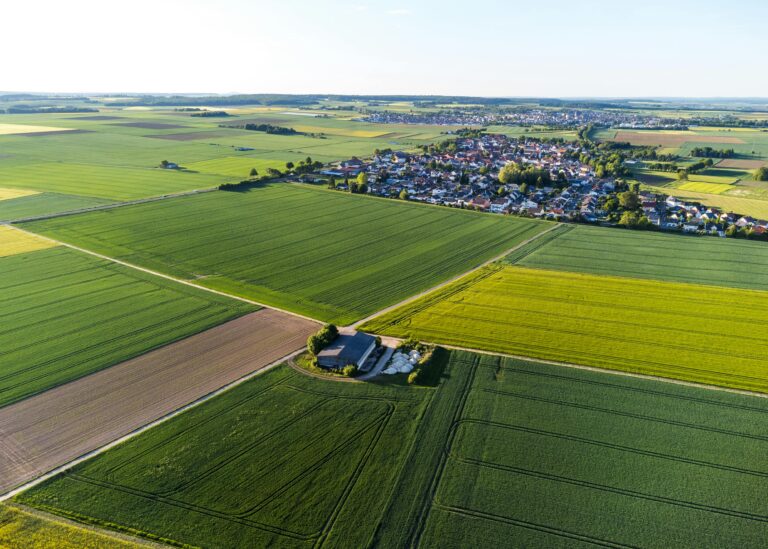
Agriculture in Sub Saharan Africa operates under a dual constraint system defined by productivity pressure and climate instability. Agroforestry emerges as a systems level intervention that integrates perennial woody biomass into annual cropping systems, thereby modifying biophysical, economic, and climatic performance variables simultaneously. This is not a diversification strategy in the conventional sense. It is a redesign of land use function.
Empirical synthesis from the World Bank, Food and Agriculture Organization, and African Development Bank between 2022 and 2024 indicates that well managed agroforestry systems can increase long term yield stability and productivity by approximately 20 percent to 50 percent depending on crop type, tree density, and agro ecological zone. These gains are primarily driven by nitrogen fixation, organic matter accumulation, and microclimate stabilization effects.
Biophysical Mechanisms and Soil System Reconstitution
The productivity differential is structurally linked to soil system restoration processes. Tree based systems increase soil organic carbon, improve cation exchange capacity, and enhance microbial activity. Peer reviewed agronomic studies across East and West Africa indicate soil moisture retention improvements ranging between 15 percent and 35 percent in agroforestry systems compared to conventional monocropping. Fertilizer substitution effects are also measurable. Synthetic fertilizer dependency declines in systems incorporating nitrogen fixing species, with observed reductions in input costs reaching 20 percent to 40 percent in mature systems. This is particularly significant given that fertilizer price volatility in African markets increased by more than 60 percent between 2021 and 2023 according to regional commodity tracking reports.
Carbon Sequestration as a Measurable Economic Variable
Agroforestry functions as both a production system and a carbon sink architecture. Carbon sequestration rates vary by species composition and management intensity, but commonly fall within a range of 2 to 10 tonnes of CO₂ equivalent per hectare per year. This positions agroforestry as a quantifiable climate asset class rather than a qualitative sustainability practice. At scale, aggregated sequestration potential contributes meaningfully to national land use, land use change, and forestry targets under climate reporting frameworks. However, monetization remains constrained by measurement infrastructure, land tenure clarity, and carbon rights definition.
Deforestation Pressure and Substitution Effects
Deforestation accounts for approximately 10 percent to 15 percent of total greenhouse gas emissions in multiple Sub Saharan African countries according to FAO land use assessments between 2022 and 2024. Agroforestry directly mitigates this pressure through substitution of forest derived resources such as fuelwood, fodder, and timber. The substitution effect operates through decentralized production of biomass resources within farm boundaries, reducing extraction intensity from natural forest systems. This creates a structural decoupling between rural energy needs and forest degradation.
Income Diversification and Household Economic Stabilization
Smallholder farmers, representing over 70 percent of the agricultural workforce in Africa, experience significant income volatility due to climate and price shocks. Agroforestry introduces secondary and tertiary income streams derived from fruit, timber, medicinal products, and fodder systems. Empirical field studies across East Africa indicate that tree based products can contribute between 10 percent and 30 percent of total household agricultural income depending on system maturity and species selection.
Hydrological Stability and Climate Adaptation Functions
Agroforestry systems materially alter hydrological behavior at the plot level. Tree root structures increase infiltration rates and reduce surface runoff. Field level studies indicate erosion reduction of up to 50 percent in sloped agricultural landscapes. During precipitation variability events, farms with tree integration demonstrate higher yield resilience due to moderated evapotranspiration rates and improved soil moisture buffering capacity.
Adoption Constraints and System Scaling Dynamics
Despite strong biophysical and economic evidence, adoption remains constrained by upfront capital requirements, delayed return cycles, and technical knowledge gaps. Tree maturation cycles introduce temporal mismatches between investment and payoff, typically ranging from 3 to 7 years depending on species. However, structured implementation models that combine extension services, input provisioning, and market linkage support have demonstrated adoption rates exceeding 60 percent in targeted pilot regions according to regional development program evaluations.
Agroforestry functions as a multi dimensional infrastructure system that simultaneously addresses production efficiency, climate mitigation, income diversification, and ecological stabilization. Its value is not additive. It is multiplicative across soil, carbon, water, and income systems. The evidence base indicates that agroforestry is not a complementary agricultural practice. It is a foundational redesign of agricultural systems in Sub Saharan Africa with direct implications for productivity trajectories, climate resilience architecture, and rural economic transformation. Its constraint is not agronomic validity. Its constraint is system level scaling capacity.
Discover more from Kilimora
Subscribe to get the latest posts sent to your email.