In This Brief
Between 2024 and 2025 Kilimora supported clean cooking delivery under the Kenya Off Grid Solar Access Project in Narok, Garissa, Kilifi and Kwale. This brief sets out what that work showed about getting a clean cooker into a smallholder kitchen and keeping it in use. A companion article, Part IVb, follows the same work to the Africa Centre for Energy Policy conference in Accra.
A smallholder household in Narok or Garissa does not meet climate policy as policy. It meets it as a choice between a bag of charcoal and a school fee, or between a morning spent gathering wood and a morning spent in the field. Kilimora’s clean cooking work in four arid and semi arid counties was an attempt to change the terms of that choice. This brief is about what we saw and what we would do differently, and it is the first of two articles written from one body of source material.
Two organisations appear throughout. KOSAP is the Kenya Off Grid Solar Access Project, a World Bank financed programme of the Ministry of Energy. AgriKonnekt is Kilimora’s platform for paying smallholders for verified regenerative practice, and it is the reason we care about what a household can afford to buy once it is paid. The Africa Centre for Energy Policy, known as ACEP, enters later, because it gave us a place to test the thinking in public.
Why the kitchen is a livelihoods question
The case for clean cooking is health and dignity before it is carbon. The IEA estimates that polluting fuels contribute to about 850,000 premature deaths a year in Africa, and the World Health Organization puts household air pollution at about 3.7 million premature deaths worldwide. Women and children carry most of the exposure, because they spend the most hours near the fire. They also carry the work of finding fuel, which takes hours that could go to school, rest or income.
A clean cooker returns some of that time and clears the air in the room. It also lowers a recurring cost, since households that buy charcoal by the tin spend steadily on something that disappears. A dignified life, in this sense, is one where a woman can cook a meal without choking and without asking permission to spend on fuel. That is why more than 60 per cent of AgriKonnekt’s recipients being women is a design choice for the energy work as much as for farming.
KOSAP: what it is
The Kenya Off Grid Solar Access Project, known as KOSAP, is a flagship project of the Ministry of Energy financed by the World Bank. It brings electricity and clean cooking to remote, low density and underserved parts of Kenya where extending the national grid is too costly. It covers 14 of the 47 counties, which together hold about 20 per cent of the population. The Ministry of Energy, Kenya Power and the Rural Electrification and Renewable Energy Corporation implement it jointly.
The headline is US$150 million for 250,000 stand alone solar home systems, 120 mini grids and 150,000 clean cooking solutions. The clean cooking part sits in a US$47 million window of results based financing and debt. A US$5 million Clean Cooking Solutions facility pays companies for verified sales of higher tier cooking products, so that supply chains form where no market existed. SNV, working with SunFunder, runs the facility on the Ministry’s behalf. Its second round covered eight counties, including Kwale and Kilifi, and listed electric cooking appliances among the eligible technologies alongside biomass, LPG and ethanol stoves.
The design choice matters. A results based facility pays after a sale is made and checked. That rewards companies that can prove what they sold, to whom and where. It also asks them to carry the cost of stock and credit until the money comes back, which is where enterprise support and household finance enter the story.
Who designs the project, and on what terms
KOSAP was designed by the Government of Kenya through the Ministry of Energy with World Bank financing, and the design reflects a view of how markets in marginal areas get built. Public money does not buy cookers for households. It pays private companies for results and offers them debt, in the hope that the supply chain outlasts the project. That is a different logic from a grant, and it has a cost: companies that lack working capital or data systems struggle to take part, which is the gap enterprise support fills. It also answers the call from ACEP to allocate risk to the parties best able to manage it.
The policy around it is clear. The Kenya National Cooking Transition Strategy 2024 to 2028 aims at universal access to clean cooking by 2028 and sets a target fuel mix in which LPG and bioethanol carry most households. The Ministry estimates it needs US$435 million over five years for that strategy and a further US$57 million for the National Electric Cooking Strategy. The latter is the first of its kind on the continent and aims for 10 per cent of households on electric cooking by 2028, with electricity as the fuel of choice by 2050.
Kenya is not alone. Uganda has a national electric cooking strategy, Tanzania has a Clean Cooking Strategy and a presidential envoy for the subject, and the IEA counts 121 new clean cooking policies across more than 30 African countries since the 2024 Paris summit, covering about 80 per cent of Africans without access. The African Union is working with the IEA on a continental clean cooking strategy and action plan, and the Union and the African Development Bank are co organisers of the summit series. The second summit, planned for Nairobi on 9 and 10 July 2026, was postponed. A virtual session went ahead on 9 July, where the IEA announced US$900 million in new commitments, lifting the total above US$3.1 billion. President Ruto’s message at that session was blunt: ambition must be backed by investment.
What Kilimora did in the ASAL counties, 2024 to 2025
Between 2024 and 2025 Kilimora worked in Narok, Garissa, Kilifi and Kwale. Our role was that of an enterprise supporting company. We did not manufacture cookers or set the programme’s rules. We supported the companies that deliver under KOSAP with three things: project implementation, data management, and the set up of systems for clean cooking equipment, with a focus on electric pressure cookers and induction cookers.
Electric pressure cookers suit these households for a plain reason. They use far less energy per meal than a hotplate or an open fire, they hold heat, and they can run on a small solar system. Kenya’s electric cooking strategy treats them as a core pathway. The difficulty is that a good appliance is easy to sell once and hard to track. A cooker that sits unused does nothing for health or emissions, and a sale that cannot be evidenced earns nothing under a results based facility. So the systems work is the substance of the support: registering the appliance, the household and the seller, recording the sale in a form that can be audited, and following usage afterwards. This is the same logic the sixth and tenth takeaways of the ACEP conference set out, as Part IVb describes,, that better data prices risk more accurately and that measurement should be designed around the decisions it supports.
From climate income to a cooker in the home
AgriKonnekt pays verified farmers within 24 hours, more than 60 per cent of recipients are women, and in the Murang’a pilot farmer income grew by 65 per cent. Clean cooking is one of the things that income can buy. But only if credit, a trusted seller and a working appliance sit at the end of the chain, and the KOSAP counties are where we learned how many of those links break in practice.
Working through the people households already trust
Clean cooking is sold in kitchens, churches and savings meetings, not only in shops. In the field we worked with very different organisations: community based organisations such as Mwangaza, and religious groups with established congregations and a record of looking after their members. These groups know which households are ready to buy, can host demonstrations where people cook a familiar meal on the new appliance, and give a buyer someone to ask when something breaks. A company arriving alone has none of that.
Finance was the second half of the same effort. Civil servants have a regular salary, so we worked with creditors such as Kenya Credit Traders to offer them instalment credit. Other households have irregular income and strong group ties, so SACCOs were the natural lender. The two routes reach different people, and neither can reach the other’s customers.
| Who | What they do in the chain |
|---|---|
| Ministry of Energy, with the World Bank | Designs and finances KOSAP, sets eligibility and results targets |
| SNV and SunFunder | Run the results based and debt facilities on the Ministry’s behalf |
| Delivery companies | Import, assemble and sell the cookers, and claim payment on verified results |
| Kilimora | Enterprise support: implementation, data management and systems for electric pressure and induction cookers |
| Community and faith groups | Trust, demonstrations, household selection and after sale help |
| Kenya Credit Traders and SACCOs | Instalment credit for civil servants and for other households |
| County governments | Local planning, public institutions, health messaging and convening |
The county is where it lands
A national strategy is carried out in a county. The KOSAP counties are the ones that national planning has long served last, with dispersed settlements and long distances to a grid. County governments hold what a company lacks: the health clinics and schools that are among the largest cooking sites, a standing relationship with communities, and the authority to convene. Our work with the counties has been to bring them verified information about who now has clean cooking and electricity, so that planning follows evidence and not guesswork. The same logic appears in AgriKonnekt’s offer to county governments: verified off grid energy access data to guide regional development planning.
The retail question
The last link is the least discussed. Chain stores and retail supermarkets already sit where low income households and farming families shop. They can display, finance and service a cooker, run instalment schemes through partners, and aggregate demand across many branches. Many smallholders and agricultural workers sell into the same supermarkets’ supply chains, and could buy a cooker through the same relationship. A retailer that stocks certified electric pressure cookers, sells them on instalments and links the sale to a verified record would reach households that no project office can.
This is Kilimora’s argument, not a finding. We have not tested it at scale, and a supermarket will only do it if the margins, warranties and after sale service work. But if livelihood transformation depends on ordinary households reaching ordinary shops with ordinary credit, the retailers who already serve them should be at the table, and the access question for low income households and agricultural actors should be put to them directly.
Why this work travelled to Accra
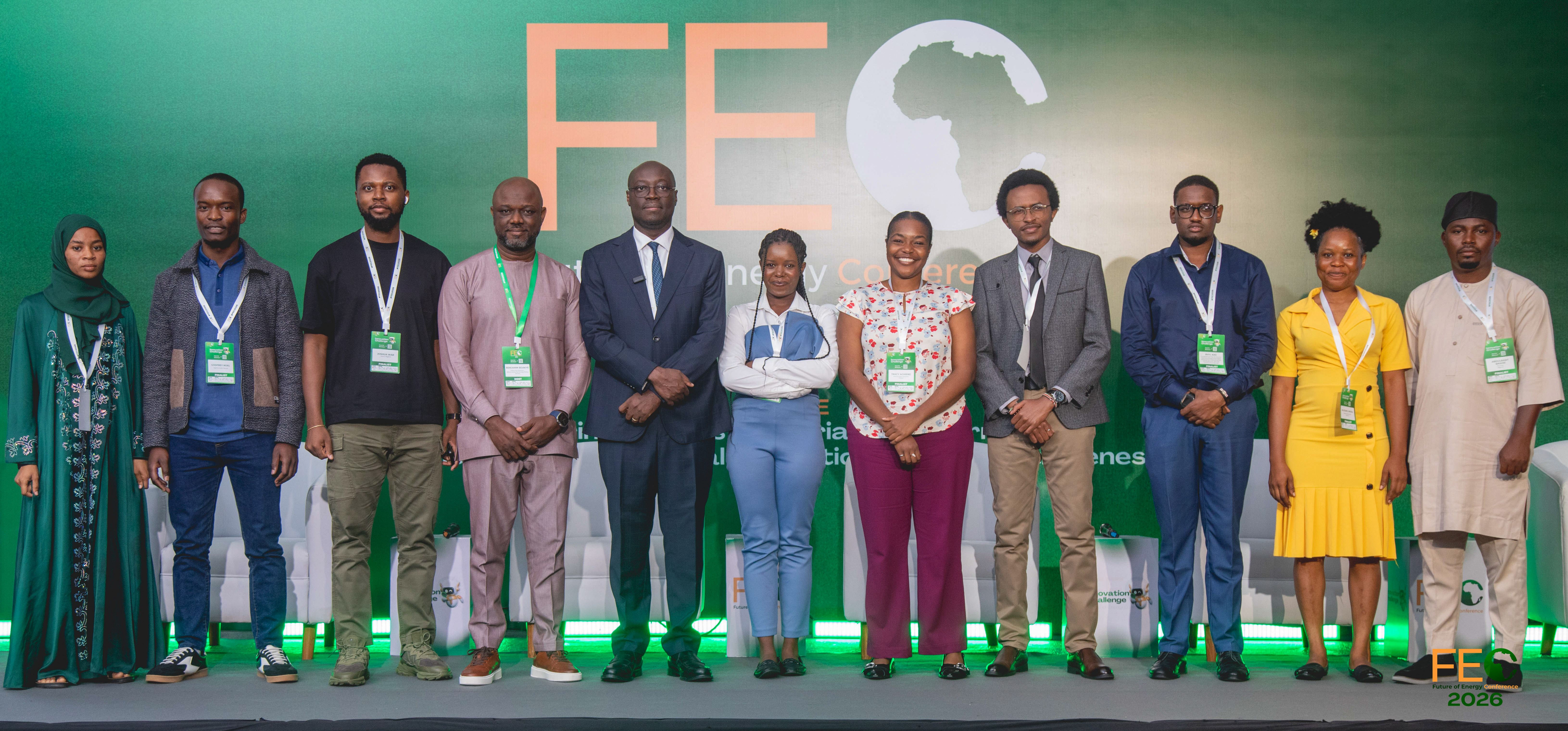
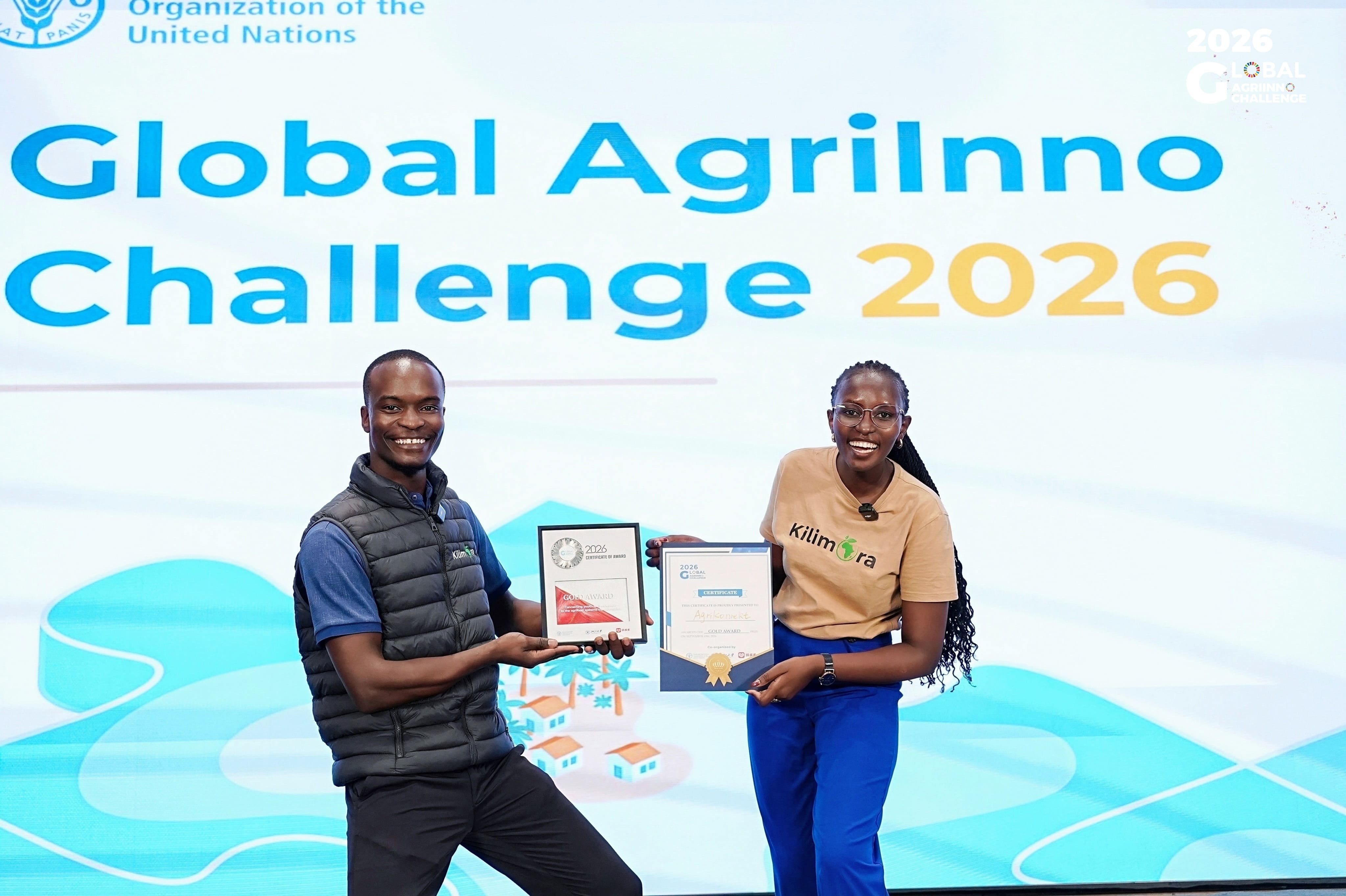
In August 2026 Godfrey Noel presented AgriKonnekt as a finalist in the Innovation Challenge run alongside ACEP’s Future of Energy Conference. We read the KOSAP years as part of why the application stood up. They gave us a record of delivery in counties where logistics are hard, a working understanding of what evidence a results based financier will pay for, and a concrete answer to the question every climate payout raises, which is what the household does with the money.
That is our reading, and ACEP has not said how it weighed any entry. Part IVb sets out what was presented, what the conference concluded, and how the field work connects to both.
What it means for Kilimora
- Lead with data and systems. Results based financing rewards proof, and ACEP’s takeaways ask for data that prices risk properly. Enterprise support that registers every appliance, household and sale is the most useful thing we bring.
- Match credit to income. Civil servants and SACCO households need different instruments. Build both, and keep repayments below what the household saves on fuel.
- Work through trusted groups. Community and faith organisations should stay at the front of delivery, with demonstrations before sales.
- Bring the counties in early. Share verified access data with county planners and use the health and education sites as anchor demand.
- Test the retail channel. Run a small, measured pilot with a chain or supermarket partner, with after sale service written into the terms.
- Publish the numbers. This brief leaves out Kilimora’s own appliance and household counts from the 2024 to 2025 work. They should be added from the project records and checked before release.
SOURCES: Africa Centre for Energy Policy (2026), Action Points: Future of Energy Conference 2026, 29 August 2026; AgriKonnekt Initiative (2026), ACEP Innovation Challenge showcase deck; International Energy Agency, Kenya Off Grid Solar Access Project; Isiolo County Government, The Kenya Off Grid Solar Access Project; SNV, KOSAP official launch; KOSAP Facilities Manager, Clean Cooking Results Based Financing call; KOSAP Facilities Manager, Clean Cooking RBF Lot 2 expression of interest; IAmRenew, Kenya launches US$47 million KOSAP facility; Business Daily, How clean energy is changing lives beyond the grid; Ministry of Energy and Petroleum, Kenya National Electric Cooking Strategy 2024; Ministry of Energy and Petroleum, Kenya National Cooking Transition Strategy, executive summary; Kenya News Agency, Universal access to clean cooking by 2028; CLASP and MECS, Stainless steel welding course for electric cooking; Loughborough University, Low carbon cooking and MECS country work; IEA, Second Summit on Clean Cooking in Africa; WAM, New commitments to clean cooking in Africa reach US$900 million; Associated Press via WTOP, Africa secures US$900 million in new clean cooking commitments; Associated Press via WSLS, 121 new policies in more than 30 countries; Capital FM, Nairobi summit postponed; Capital FM, Ruto on the clean cooking transition; Africa Sustainability Matters, Kenya to host the 2026 clean cooking summit.