In This Brief
Xinhua featured Kilimora’s work and its gold medal win in Hangzhou, including the technology we want to bring from China to Kenya, then across Eastern Africa and, over the long term, sub Saharan Africa. This brief sets that work against the China, Africa trade record.
On 13 October Xinhua published a feature built on interviews with Kilimora about our work and our win in China. We are the ones taking this forward, and our partner, Murang’a Farmers Cooperative Union, hosts the pilot on its member farms. The story opened on a Murang’a coffee farm, where tall shade trees keep the soil moist and farmers are replacing some synthetic fertiliser with organic inputs. Irene Kabochi, the union’s chief executive officer, told Xinhua that the union wants to help farmers prepare for changing weather, and that data services and agricultural technology could help cooperatives collect and analyse farm information as groundwork for climate finance.
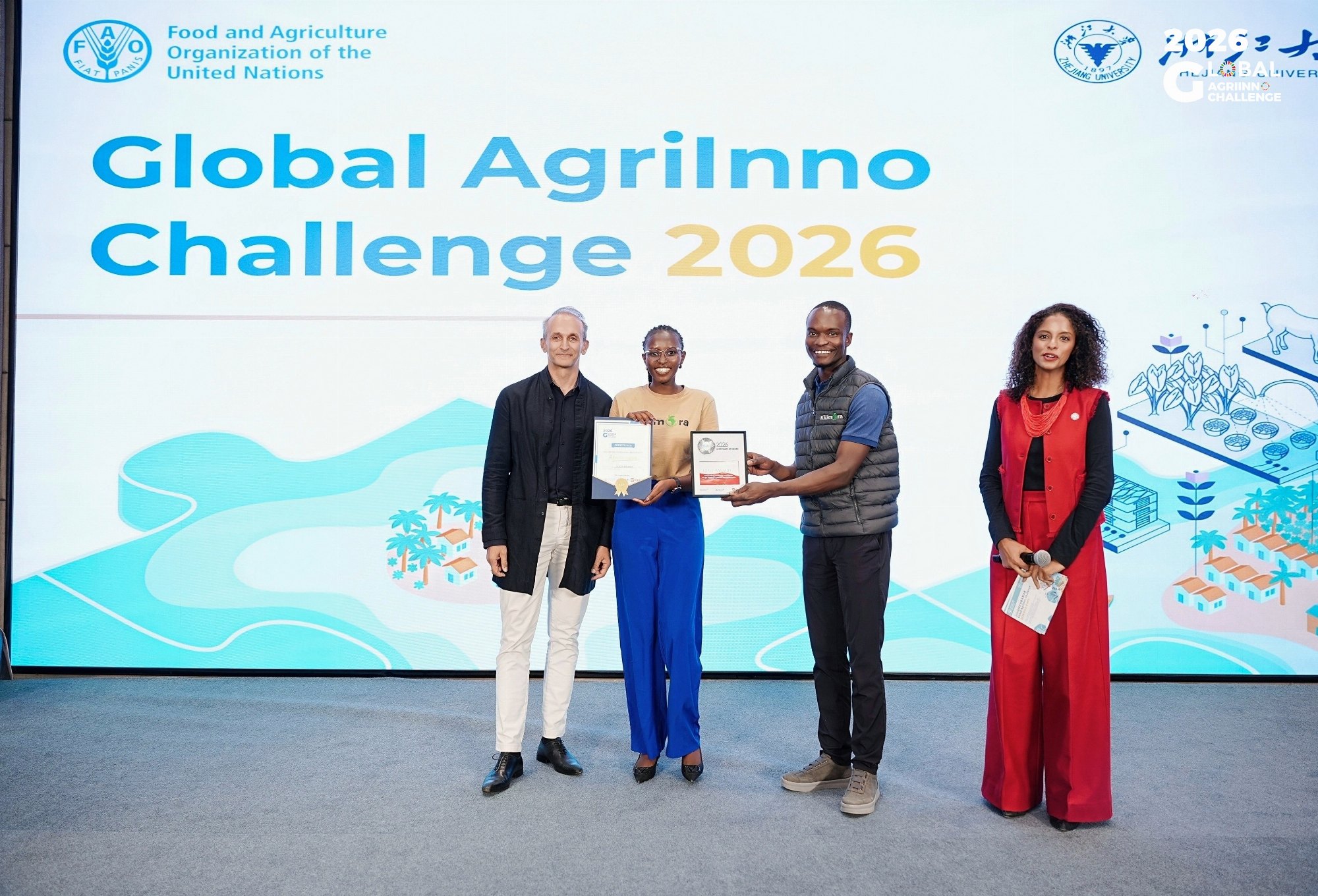
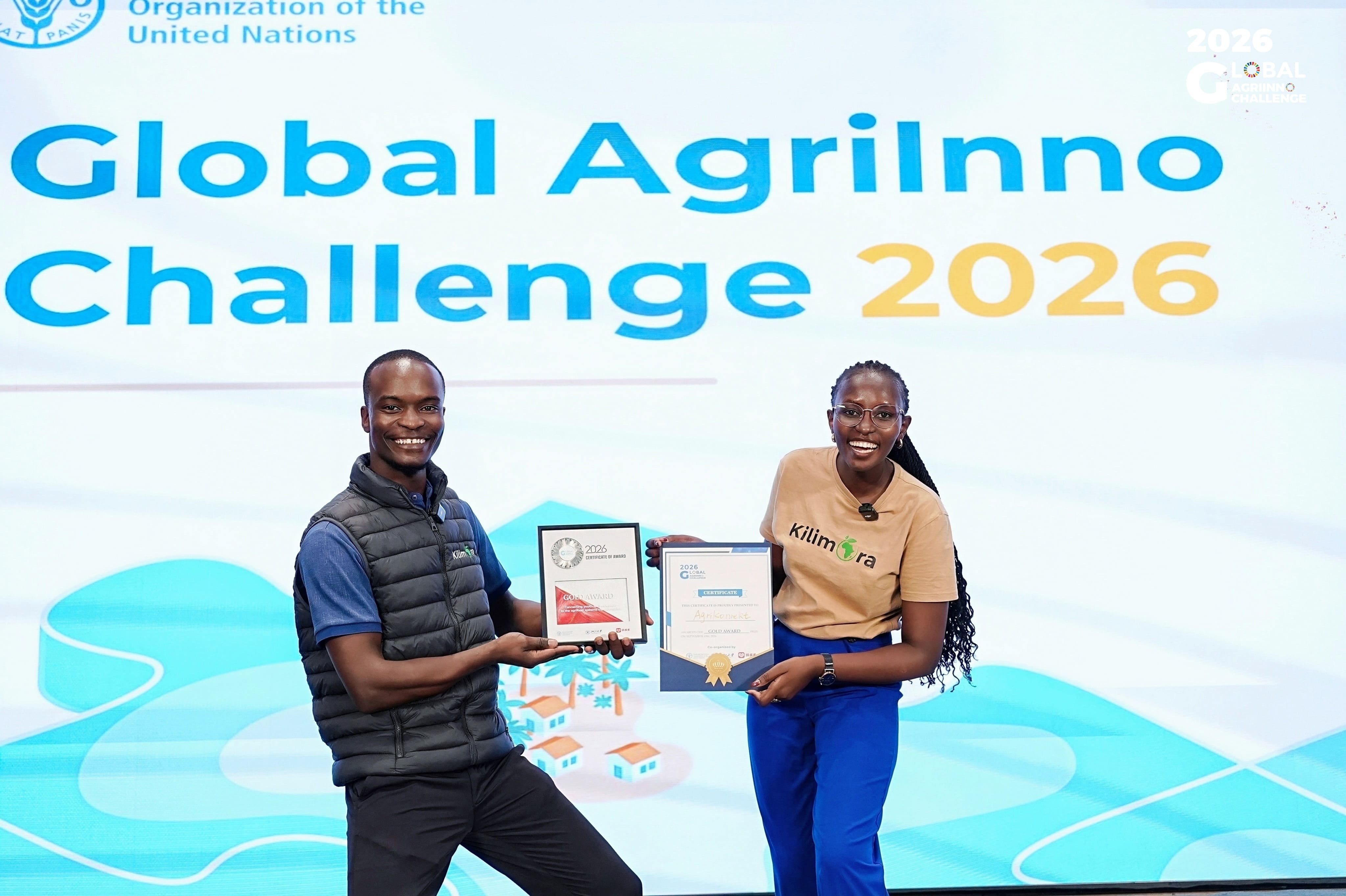
The feature put Kilimora’s work in front of a Chinese audience: the technology we want to bring from China to Kenya, then across Eastern Africa and, in the long term, sub Saharan Africa. The route in is AgriKonnekt, the Kilimora project that took gold at the Global AgriInno Challenge 2026 final in Hangzhou in September. That competition is a platform for young innovators, and it puts them in front of Chinese universities, technology firms and climate finance buyers. AgriKonnekt measures farm practice with soil sensors and satellite data, verifies it, and takes the evidence to climate finance providers. Approved money returns to farmers as seedlings, organic fertiliser and seed at no cost to them. We are working with the union to diversify beyond coffee into macadamia and avocado; the union is supplying seedlings and plans a demonstration farm. Simon Macharia, who has grown coffee for more than a decade, said the free seedlings made him think about better planting materials, and farmers in the project are trying lower chemical practices to cut costs.
Two ends of one story
Nairobi and Hangzhou lie on opposite sides of the Indian Ocean, roughly 8,000 kilometres apart. The globe below puts Africa and China on one view, with a dotted line from Murang’a’s coffee hills to Zhejiang’s labs and markets.
The ledger: record trade, lopsided balance
China has been Africa’s largest trading partner for years, and 2025 set another record. Chinese exports to the continent grew 25.8 per cent to $225.03 billion, while African exports to China grew only 5.4 per cent to $123.02 billion. That left an African deficit of $102.01 billion (Ecofin), against $61.93 billion a year earlier (African Business).
Part of the story is what we trade. In 2022 about 89 per cent of Africa’s exports to China were extractive commodities, while 94 per cent of what Africa bought from China were manufactured goods (Serrari Group). Raw beans, ores and scrap go east, and machines, vehicles and electronics come west. The prize for a cooperative is to climb that ladder: graded, traceable, branded and processed.
The zero tariff road
China gave zero tariff treatment on all tariff lines to 33 least developed African countries from December 2024. Kenya is not one of them. On 1 May 2026 China extended the treatment to all 53 African countries it has diplomatic ties with (Chinese Embassy in Kenya). For the 20 non LDCs, Kenya among them, it comes as a preferential rate for two years, to 30 April 2028, as a bridge to the proposed China, Africa Economic Partnership for Shared Development agreement (The Star/Xinhua). An analyst quoted by Fruitnet stressed that it is a unilateral offer, not a treaty, so our plans must pay back beyond it.
Kenya’s side of the scale
Kenya’s deficit with China grew 19.0 per cent to a record KSh654.3 billion in 2025, up from KSh549.8 billion. China supplied 24.2 per cent of Kenya’s imports and took only 1.15 per cent of its exports (Business Daily). Coffee and tea sales to China reached $24.46 million, 10.8 per cent of Kenya’s farm exports there, and avocados with macadamia added $19.9 million (FreshPlaza, Serrari). Tariffs were one wall. Volume, grading, traceability and a route to the Chinese shopper are the others.
What the months since May show
The early readings are cheerful. China’s imports from Africa grew 14.6 per cent in the first quarter of 2026, then 21.1 per cent in May and 40.2 per cent in June, ahead of China’s overall import growth (Capmad, SCMP summary). The first half set a record near $196.6 billion (africa.com).
Now the honest part. Africa’s deficit still widened 34.48 per cent to $80.07 billion in January, August 2026 (africa.com). A zero tariff opens a door, and only goods that meet Chinese standards at scale walk through it.
Reading it honestly
- The collaborations are proposals. Nothing with Top Cloud Agri, Pinduoduo or Zhejiang University is signed. They are conversations we want to open, and the regional steps are our intention.
- Zero tariff is a two year offer. It is a preferential rate to April 2028 and not a treaty, so investments must pay back on a longer horizon.
- First half data are not uniform. Outlets report the 2026 half year trade total differently, and we use the most widely repeated figure, $196.6 billion.
- Trade balance is not the whole balance of payments. The figures here cover goods trade with China. Services, remittances, investment income and debt service also shape Kenya’s external position, and we have not covered them.
- Quality, not the tariff, is the binding limit. Buyers will pay for graded, traceable lots at volume, and small unpooled farms cannot supply that alone.
Coffee gives us a strong base
The Nairobi Coffee Exchange paid growers about KSh41.6 billion for 47 million kilograms in 2025/26, up from KSh35.6 billion the season before. Kenya’s average auction price rose to $7.21 a kilogramme in 2025 from $4.90 in 2024 (Kenya News Agency). Murang’a ranked second by value at KSh4.33 billion from 4.96 million kilograms (The Star). Prices have since eased, which is exactly why one market is never enough. About 80 per cent of Kenya’s coffee moves through cooperatives (The Cooperator).
Where this goes: Kenya, East Africa, then the region
The feature was mainly about the collaboration and the technology, and about the order in which we want to apply it. The first two steps come from the Xinhua report: about 2,000 farmers today, and at least 12,000 across Kenya, Uganda and other areas within twelve months. Beyond that the steps are our intention, and each depends on partners, finance and results from the stage before.
The regional market is opening at the same time. China will let eligible coffee beans from all 53 African countries with diplomatic ties enter from 20 July 2026 (FoodBusiness Africa), and the old minimum tariff of 8 per cent on African coffee beans is gone (China Services Info). Ethiopia shows the pace: its coffee exports to China have grown about 27 per cent a year, and China is now its fourth largest coffee destination (Henan government portal). A cooperative is already on that road, as a columnist reports that the Oromia Coffee Farmers Cooperative Union supplies branded coffee directly to Chinese supermarkets (The EastAfrican). Rwanda has had duty free access since December 2024 (KT Press). One gap remains on the compliance side: a Chinese official said talks on customs trust (AEO) recognition continue with Kenya, Ethiopia, Tanzania and Ghana (Lusaka Times). That is why shared traceability and verification tools matter across the region and not only in Murang’a.
Three collaborators we want to work with
Devices, with Top Cloud Agri. The Hangzhou firm was founded in 2008, listed on the Shenzhen exchange in October 2024 and builds agricultural testing instruments and IoT services (Preqin). We would like to work on product design for our conditions: probes that survive a rainy season, run on solar or long life batteries, store readings offline and sync when the signal returns, and cost little enough for a cooperative to own a fleet and lend it to members.
Market access, with Pinduoduo. It began with farm produce and describes itself as China’s largest online platform for agricultural goods (AlphaStreet). Its Duoduo Premium Produce programme sends teams into farming regions to design plans for local specialities (TMTPost). We would bring due diligence to the table: lot level traceability from farm to mill, cupping and grading records, residue and food safety tests, and Chinese customs and registration rules checked before the first container sails. High quality coffee, macadamia and avocado from East Africa earn a wider Chinese market only if buyers never doubt a lot.
Research, with Zhejiang University. Noel’s tour of its greenhouses got him thinking about protected farming for Turkana and other dry zones. There is a precedent: Zhejiang University and the University of Ghana opened a China, Africa Partner Research Institute for rice breeding (WACCI). We would like to propose the same spirit for East African coffee and fruit: trials on shade and soil moisture, low cost protected cultivation, and the verification science that climate finance asks for. Egerton University’s joint laboratory with Nanjing Agricultural University shows Kenyan campuses can host such work (Agri Focus Africa).
Technology to move, and who carries it
| Technology or method | Chinese source | How a cooperative carries it | Proposed reach |
|---|---|---|---|
| Soil pH and moisture sensing, low power networks | Agri IoT makers such as Top Cloud Agri | Union owns the devices; extension staff read and advise members | Kenya pilots first, then Uganda and the region |
| Ground plus satellite verification for climate finance | AgriKonnekt platform | Union aggregates farm data; finance returns as free inputs | Kenya and Uganda now, wider Eastern Africa next |
| Science and Technology Backyard extension | China Agricultural University; a Kenyan backyard was planned (China Daily) | Trained graduates live in the community and run demonstration plots | Eastern Africa, sharing trained graduates |
| Pooled grading and group selling | Pinduoduo’s group buy model | Union pools small lots to meet volume and quality | Cooperatives with the same coffee and fruit lines |
| Protected cultivation and growing media | Zhejiang University greenhouses | Pilot on the demonstration farm before wider use | Dry zones such as Turkana, then similar sub Saharan areas |
The common thread is the member led framework. One smallholder cannot buy a sensor fleet, fund a verification audit or fill a container. A cooperative, or a community based organisation of similar standing, can do all three, keep records buyers trust and hold the capital in common.
What it means for Kilimora
The Hangzhou win and the Xinhua feature open doors, but each step is ours to take. Kilimora can start with one move in each area.
- Pilot the devices. Start on Murang’a member farms and at the mill, and invite Chinese partners to co design sensors that suit our conditions.
- Trace every lot. Build the records so a buyer in China can follow a bag back to a ridge and a farmer, with grading, residue tests and customs checks done before the first container sails.
- Keep farmers in control. Farmers own their data, assets stay with the cooperative, and every pilot must cut members’ costs or lift their prices.
- Open the Hangzhou conversations. Begin with Top Cloud Agri, Pinduoduo and Zhejiang University, and start research with field trials alongside AgriKonnekt data.
- Share the model and report openly. Offer what works in Murang’a to cooperatives in Uganda and the wider region, and publish what does not, so others can learn from us.
SOURCES: Xinhua, Kenyan youth explore climate finance to promote green agriculture; Ecofin, Africa’s trade gap with China hits record $102B; African Business, Surge in Africa’s China imports prompts calls to tackle trade deficit; Africanews, Chinese exports to Africa soar despite tariff wars; Serrari Group, The avocado opportunity and its challenges; Serrari Group, Why Kenya must act fast on China’s new offer; Chinese Embassy in Kenya, via China’s Foreign Ministry, Zero tariff policy opens new chapter of China, Africa cooperation; The Star/Xinhua, China to grant zero tariff treatment to African countries with diplomatic ties; Fruitnet, South African apples first to benefit from expanded zero tariff policy; FreshPlaza, China to remove tariffs on most African imports from May 1; FreshPlaza/Capital News, Kenya prepares suppliers to expand agricultural exports to China; Business Daily, Collapsed exports widen Kenya, China trade gap; Capmad, China, Africa trade surge of 24% in H1 2026; SCMP summary, China’s imports from Africa surge after Beijing expands zero tariff policy; africa.com, China, Africa trade hits record high; africa.com, China, Africa trade gap widens; Kenya News Agency, Coffee farmers earn Sh41.6 billion as NCE records stronger 2025/26 season; The Star, Kericho tops Kenya coffee sales as earnings hit Sh31.9bn; The Cooperator, Kenya coffee sector outlook and the Coffee Act 2026; Preqin, TOP Cloud Agri company profile; AlphaStreet, Pinduoduo sees significant opportunity in smart agriculture; TMTPost, Pinduoduo’s agriculture model and Duoduo Premium Produce; University of Ghana WACCI, China, Africa Partner Research Institute with Zhejiang University; Agri Focus Africa, Kenya, China agricultural cooperation aiding hunger fight; China Daily, Cooperation program helps boost food output in Africa; FoodBusiness Africa, China opens coffee market to 53 African countries under new import, zero tariff trade policy; China Services Info, China brewing up business for African coffee beans; Henan government portal, Zero tariff policy brings more African products to Chinese market; The EastAfrican, As the West shuts the door on Africa, China is flinging its gates wide open; KT Press, Rwandan exporters are celebrating a year of tax free access to Chinese market; Lusaka Times, China opens wider market for Zambian exports.