In This Brief
Twenty years into the Forum, 5,141 delegates and 90 plus commitments sent one message: move from promises to capital in the ground. We read the Kigali communiqué, then follow the long road behind it, from AGRA and Kampala to climate finance, mechanization, value addition and the young Africans building the answer.
When the Africa Food Systems Forum gathered in Kigali in September 2026, under President Paul Kagame’s leadership, it was marking twenty years of a conversation that began as the African Green Revolution dialogue. The theme, Investing in Africa’s Agri Food Systems: Growing Jobs, Nourishing Nations, Building Resilience, made the mood plain. Delegates arrived as Africa entered the 2026 to 2035 CAADP implementation period, guided by Agenda 2063 and the Kampala CAADP Declaration, and the message was repeated until it stuck: move from knowledge to delivery, from pilots to scale, from commitments announced to capital mobilized.
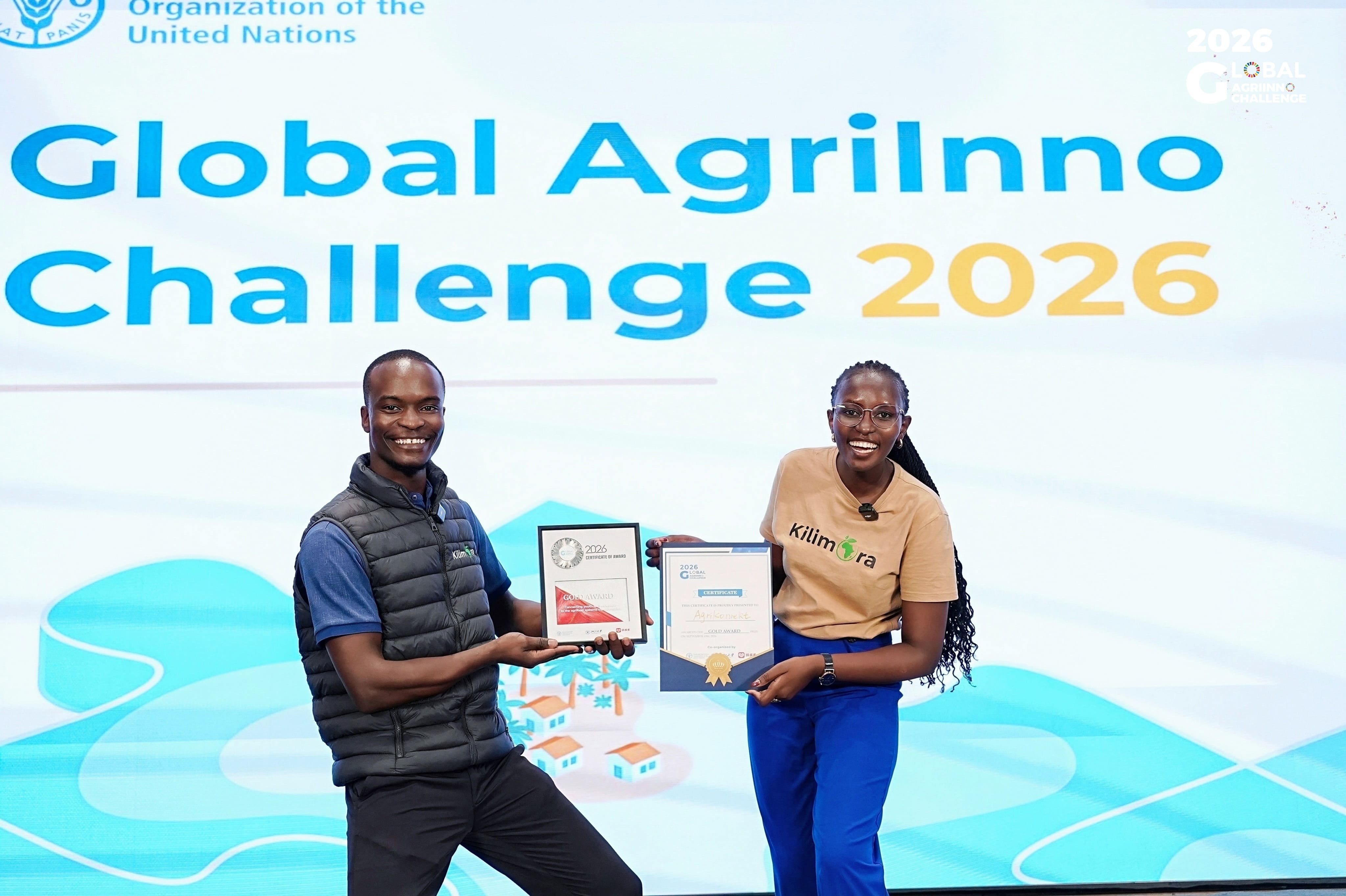
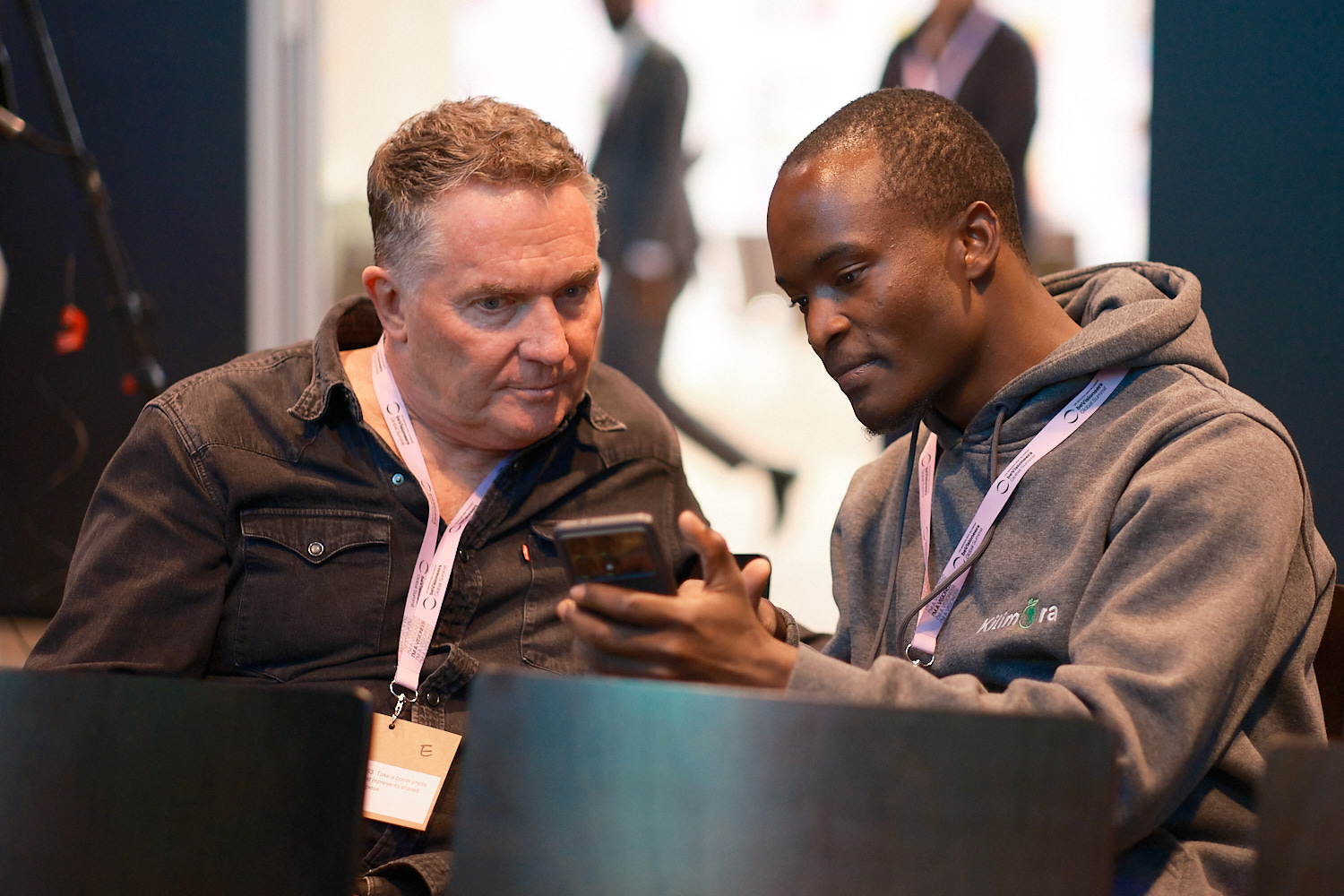
At Kilimora we followed the week closely, and not only from the audience. Godfrey Noel presented Kilimora at the Forum, and the company was named among the winners of the GoGettaz Agripreneur Prize, which we come to below.
Attendance mix reported by the Forum
Ten commitments, one direction
The Kigali Commitment boils down to ten pledges. Three carry the hard numbers: US$100 billion by 2035 mobilized for agrifood transformation, at least 10% of annual public expenditure directed to agrifood systems, and an ambition that at least 15% of agrifood GDP is reinvested in the sector every year through a New African Financial Architecture. The other seven widen access to finance, land and skills for youth, women and the “hidden middle”; scale sustainable production; build corridors and cold chains; make projects bankable; mobilize climate finance; strengthen institutions; and track delivery every year.
Where the money was announced
The Forum logged more than 90 commitments across investments, partnerships, policy and technical support. The funded headline items were led by IFAD’s US$200 million climate adaptation facility for Rwanda, Kenya, Tanzania and Uganda, and Equity Bank’s US$180 million ARCAFIM blended facility, which crowds local private capital into climate adaptation with partners including IFAD, the Green Climate Fund, Finland and the Nordic Development Fund.
US$ million, as listed in the communiqué’s announcements table
Added at face value, the eleven listed lines come to about US$670 million. Some overlap is possible, since the IFAD and Bank of Kigali facility and the Equity linked facility draw on shared partners, so read it as a sense of scale rather than a ledger. The US$100 billion goal is a 2035 mobilization target and is a different thing from money announced this week.
Ten countries, nearly US$9.6 billion in asks
At the Agri Food Investment Forum, Ethiopia, Malawi, Uganda, Liberia, Zambia, Tanzania, Nigeria’s states, Sierra Leone, Rwanda and Somalia presented Legacy Investment portfolios, spanning sorghum, rice, maize, soy, edible oils, avocado, horticulture, livestock and fisheries. Together they requested US$9.56 billion. Ethiopia and Malawi alone account for over half.
Investment requested, US$ million. These are requests, not confirmed financing.
These are investment requests, not confirmed financing. One more flag for the editors: the table lists Rwanda at US$2.6 million, while the Rwanda section describes a legacy ambition of about US$1.6 billion. The chart follows the table as printed, and the totals only add up on that basis, so the figure is worth confirming with the organizers.
Rwanda’s four big bets
| Priority | The target |
|---|---|
| Legacy value chains | Avocado, chili, potato, poultry, beef and innovative finance, about US$1.6B ambition |
| Greenhouse horticulture | US$1.1B agricultural exports in FY 2025/26, 24% year on year growth |
| Food Basket Sites (FOBASI) | 13,000+ sites, about 490,000 hectares, 50% productivity gain by 2029 |
| Food Innovation Ecosystem | 30,000 youth jobs and agrifood exports above US$650M by 2035 |
The host also signed the week’s clearest example of how blended finance should work. IFAD, Aceli Africa and Bank of Kigali agreed a US$12 million package that mobilizes US$21 million for farmers’ organizations, backed by a US$6 million allocation from GAFSP’s Business Investment Financing Track.
How US$21 million is built
Who was in the room
The Presidential Summit and Youth Townhall set the tone: youth as entrepreneurs and future leaders rather than beneficiaries, and food security tied to economic sovereignty, processing, storage and intra African trade. Behind that sat 700 plus speakers, 300 plus CEOs and heads of institutions, and more than 2,000 young people. Ten dialogues, from climate resilience to women in food systems, turned the week into a call to action.
Who took part in the Presidential Summit and wider programme
Kilimora at the Forum
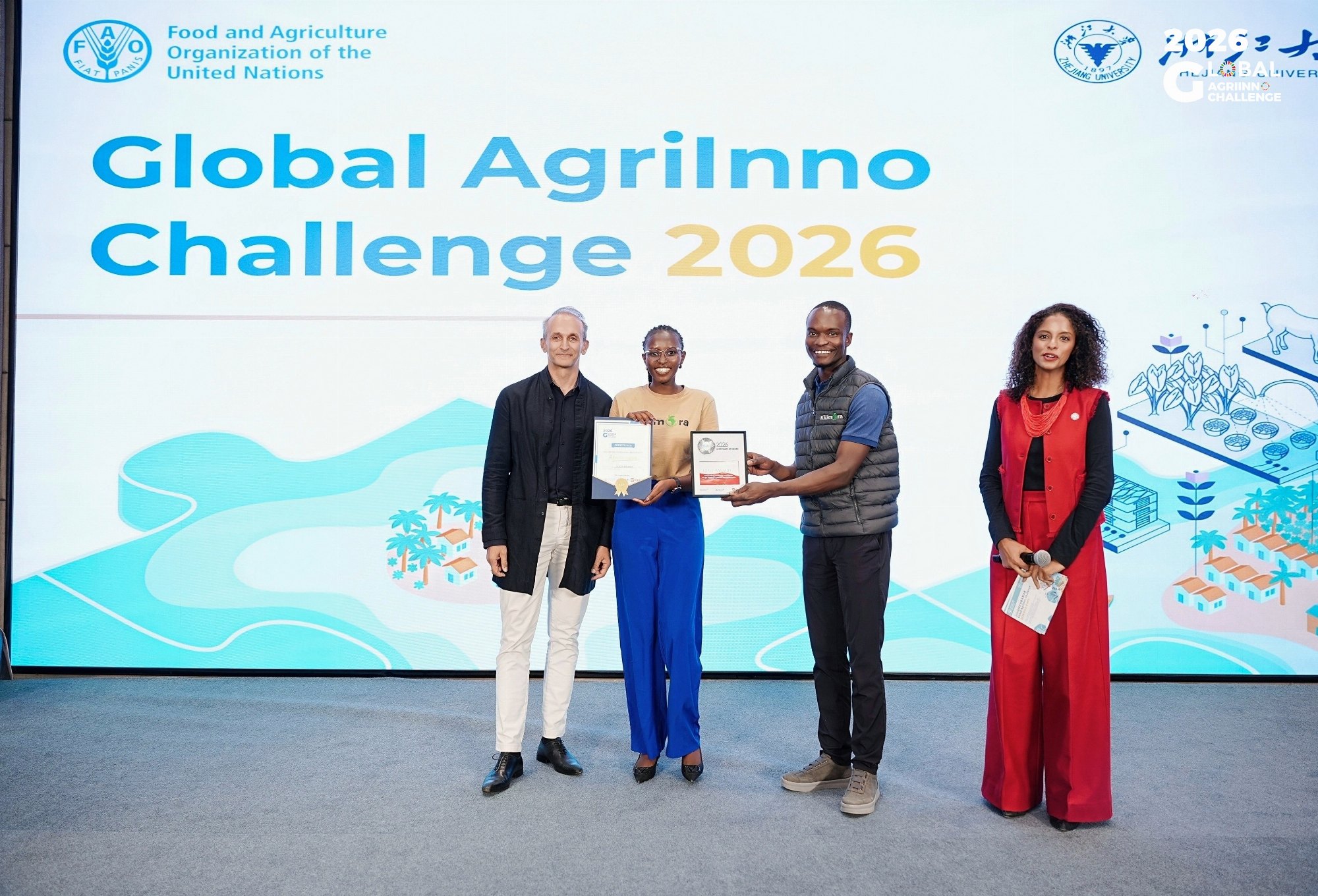
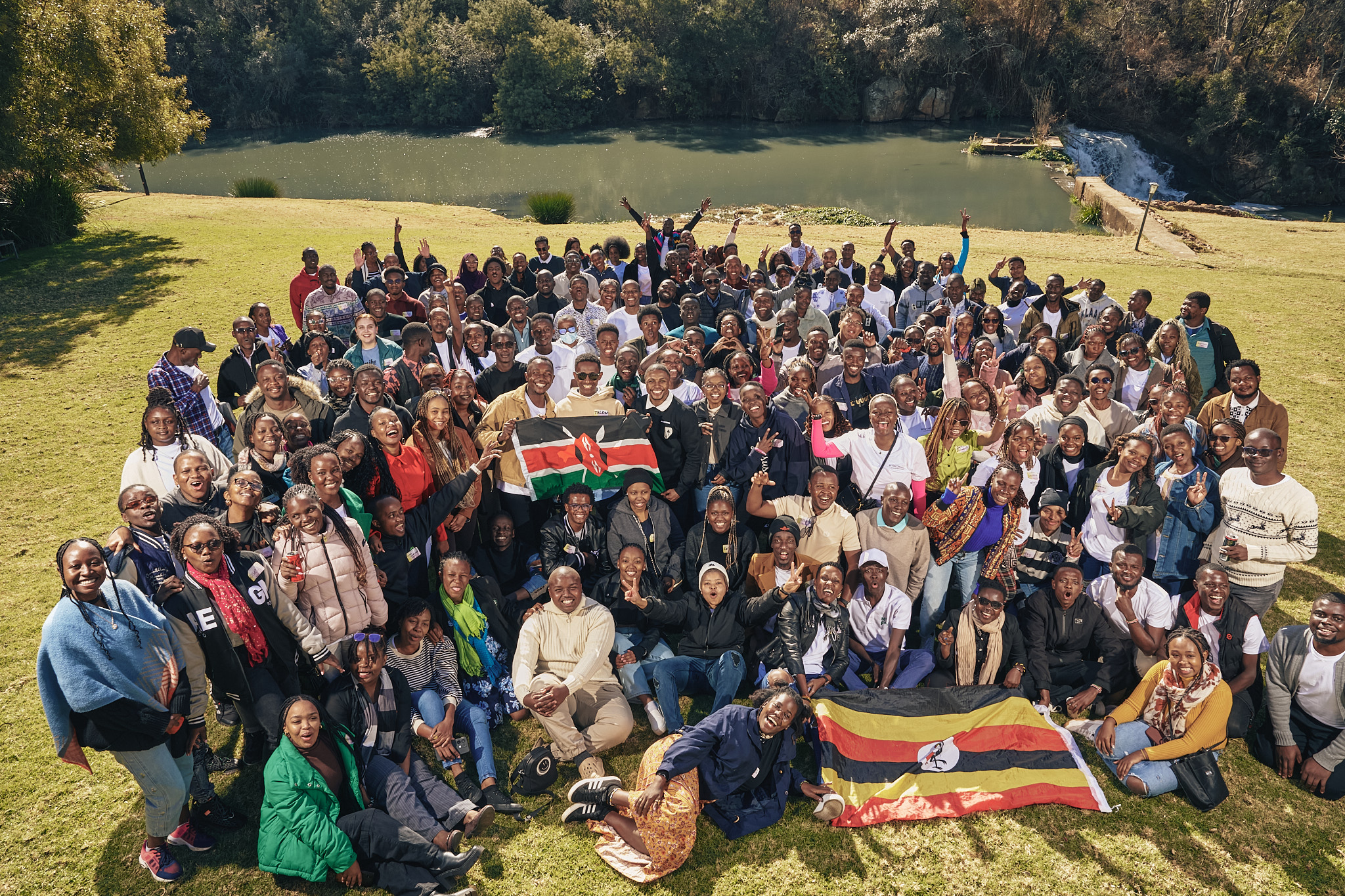
Godfrey Noel presented Kilimora, a Catalytic Award winner
The GoGettaz Agripreneur Prize drew more than 4,250 entries from 47 African countries. Kilimora, Kenya, was named among the six Catalytic Award winners, which shared US$6,000. Kilimora stood among fellow winners from Morocco, Senegal, Ethiopia and Nigeria, a reminder of how much African agripreneurship is in motion.
How US$166,000 was shared across three categories
Two grand prizes of US$50,000 each, four Impact Awards sharing US$60,000 and six Catalytic Awards sharing US$6,000 were awarded to winners from across the continent.
A Forum that talked back
Beyond the sessions, the Forum ran as a media house: a 360 media room, a new AFSF radio and podcast studio with Farm Radio International, and coverage from over 150 accredited journalists. Interviews recorded on site will air across more than 1,000 radio stations in the months ahead, extending Kigali far beyond the venue. The Agri Food Expo hosted 69 enterprises, and the TEDx stage brought 16 speakers.
Media and content output over five days
From announcement to accountability
The Forum’s own test is blunt. Everything above matters only if it becomes projects, jobs and measurable results. The Kigali Delivery Agenda sets the path, with a first public report card due at the 2027 Annual Summit.
Six steps from announcement to accountability
Where AGRA came from, and what it did
In 2006 the Rockefeller and Gates foundations, with former UN Secretary General Kofi Annan as its first chair, launched the Alliance for a Green Revolution in Africa. The stated aims were to double the incomes of 20 million (later 30 million) smallholders and halve food insecurity, working inside CAADP, the AU’s agriculture framework. AGRA’s own account of its first decade, AGRA 1.0 (2006 to 2016), stresses systems: more than 800 PhD and MSc graduates trained, and a seed sector that went from two nationally owned seed companies to 110 local firms across East and West Africa. Later phases pushed to 659 varieties across 18 crops and, by AGRA’s count, 11 million farmers reached directly and 26 million indirectly. Today’s AGRA 3.0 turns to leadership, land and young people.
The record is contested, and an honest article says so. Critics, including researcher Timothy Wise, argue that yields grew slowly, that reaching farmers “indirectly” says little about impact, and that undernourishment rose in AGRA’s focus countries. A Mathematica review that AGRA commissioned itself found success building the business environment and exceeding reach targets, but weaker results at farmer outcome level. The fair reading: AGRA built institutions and markets faster than it moved yields and incomes, which is exactly the delivery problem the Kigali Forum named.
From Maputo to Kigali: the declarations that built today’s Forum
The declarations, and what they promised
Maputo (2003) asked governments to spend at least 10% of budgets on agriculture and aimed for 6% annual sector growth. In that first phase 45 states signed CAADP compacts and 31 drew up investment plans, which is where the idea of national “pacts” took root. Malabo (2014) added seven commitments: ending hunger, tripling intra African farm trade, building resilience and mutual accountability through the Biennial Review. Kampala (January 2025) moved the frame to whole agrifood systems for 2026 to 2035. Each connects to Agenda 2063, whose aspiration for agriculture led growth and the end of hunger CAADP is meant to deliver. Kigali then put numbers on the next step: US$100 billion by 2035, 10% of public spending, and 15% of agrifood GDP reinvested.
Malabo’s verdict in 49 dots
The accountability machinery is real. After four review cycles (2017, 2019, 2021, 2023), Africa has a continent wide scorecard, and farm exports rose from US$25.3 billion in 2003 to US$73.2 billion in 2021. Intra African farm trade roughly tripled, from about US$6 billion to nearly US$20 billion.
US$ billion; dashed line shows the climb between the two years
The policy architecture, and where it bites
Declarations only matter if they change laws, budgets and prices. Kampala’s design leans on this: it wants CAADP Biennial Review indicators mainstreamed into national planning, monitoring and budgeting systems, so the scorecard is built into the same documents ministers of finance already use. Kigali’s parliamentarians committed to use legislation, budgeting and oversight to deliver CAADP, and the Ministerial Roundtable called for inter ministerial coordination, since a food systems agenda spans agriculture, trade, finance, energy, health and youth ministries at once.
The Maputo promise, measured
| Policy lever | What the evidence shows | What is needed |
|---|---|---|
| Budget share | The 10% target has been met by about a fifth of countries; commercial lending to agriculture is under 5%. | Ring fenced spending, reported through the Biennial Review. |
| Tariffs and trade | Tariff escalation rewards raw exports: the EU charges 0% on green coffee beans under its GSP scheme but 2.6% on roasted beans. | AfCFTA rules of origin and tariffs that reward African processing. |
| Mechanization | India built a national network of custom hiring centres; China paired machines with extension and demonstration centres. | Service hubs, leasing, repair and operator training, not just imports. |
| Finance and risk | Private money is 18% of African climate finance and concentrated in a few countries. | Guarantees, de risking and local currency products, as Kigali pledged. |
| Youth voice | The Kigali Youth Declaration (2024) and the African Youth Position on food systems, policy and climate now exist as reference texts. | Formal youth roles in national CAADP planning and Biennial Review teams. |
Rwanda gives a live example of policy turned into targets: 13,000 plus Food Basket Sites, a 50% productivity gain by 2029, and a food innovation strategy built around 30,000 youth jobs. Countries that can tie such targets to a funded plan and a public scorecard are the ones likely to turn Kigali’s asks into deals.
The gap
Against that progress sits a stubborn fact. In 2025 Africa recorded the world’s highest absolute count of undernourished people, about 309 million, overtaking Asia. The rate eased slightly from 20.3% to 20.0%, the first pause since 2017, but population growth kept the headcount rising. Two thirds of Africans cannot afford a healthy diet, and nearly 60% of the world’s projected hungry in 2030 would be African. Africa still spends heavily on food imports too, estimated by Afreximbank at around US$50 billion a year.
People undernourished, 2025. Square area is proportional to people. Africa overtook Asia for the first time.
Follow the money: capital into Africa, and what reaches the farm
Africa is not short of capital flows; it is short of capital that lands on farms. Remittances were about US$100 billion in 2024, roughly 6% of the continent’s GDP. Foreign direct investment hit a record US$94 billion in 2024 (first reported as US$97 billion), then eased to about US$70 billion in 2025, still the third highest total since 1990, with North Africa taking about two thirds of the 2024 surge. Tracked climate finance reached US$43.7 billion in 2021/22, up 48% in two years, yet that covers only 23% of what Africa’s climate plans require, 87% of it comes from international sources, and private money is only 18% of it.
Bubble area is proportional to US$ billion. Different years and sources, shown for scale: agriculture is a sliver of every channel
Agriculture sits at the thin end of every channel. The sector produces 20 to 30% of GDP in many African countries and employs over 60% of workers, yet it receives under 5% of commercial bank lending: about 4% in Kenya and Ghana, 3% in Sierra Leone, and 12% in Tanzania, the high end. Estimates of the annual agriculture financing gap run from US$65 billion (AGRA) to US$100 billion. African agrifoodtech startups raised US$192 million across 91 deals in 2024, about 5% of the developing market total, and US$2.4 billion over ten years against US$222 billion globally.
Grants, debt and equity: what kind of money is it?
The mix matters as much as the volume. Globally, the grant share of agrifood climate finance fell from 79% in 2013 to 58% in 2022 while debt climbed from 21% to 42%. In Africa’s agriculture adaptation finance, grants and low cost debt each made up 49% in 2017/18, market rate debt 2% and equity under 1%. In 2025, for the first time, equity fell below half of African agtech funding, with equity at roughly US$80 million against about US$328 million in 2022. Debt is not a free lunch for a continent where even debt distressed countries still take 36 to 43% of their climate finance as loans.
Share of financing by instrument, percent
US$ million, African agtech funding
Climate finance into African agriculture: the hard numbers
Globally, agrifood systems received just 4.3% of tracked climate finance in 2019/20, about US$28.5 billion a year, even though they generate close to a third of greenhouse gas emissions: 2% of mitigation finance and 1% of adaptation finance. Sub Saharan Africa was the second largest destination at US$4.4 billion (16%), despite being among the most climate vulnerable food producing regions. CPI says agrifood climate finance must rise at least sevenfold just to reach the most conservative estimate of needs.
Within African adaptation finance, agriculture is the largest recipient, at about 26%, or US$3.4 billion a year. Against that, the Global Center on Adaptation puts Africa’s adaptation shortfall at roughly US$365 billion through 2035 for agriculture, and Climate Focus estimates smallholders on plots of 10 hectares or less in Africa need around US$71 billion a year. By our arithmetic that need is about twenty one times today’s adaptation flow to the sector. Worldwide, smallholders received just US$1.59 billion of climate finance in 2021, about 0.36% of their need, and only 16% of banks surveyed lend to them at all.
Hollow dot: what flows today. Solid dot: the estimated need, US$ billion per year
Share of Africa’s tracked climate finance, 2021/22
Spread across the decade to 2035, the Forum’s US$100 billion mobilization goal averages about US$10 billion a year (our arithmetic). That would be roughly three times today’s US$3.4 billion in agricultural adaptation finance, but still short of the smallholder adaptation need alone. Kigali’s first concrete signals point the right way: IFAD’s US$200 million blended facility for climate adaptation finance across Rwanda, Kenya, Tanzania and Uganda, and Equity Bank’s US$180 million ARCAFIM facility backed by the Green Climate Fund, IFAD and Nordic partners.
Where the money goes is as unequal as how much there is. The top ten African countries receive about half of all climate finance and the bottom thirty only 10%. For private capital the concentration is starker: ten countries took 76%, and South Africa, Egypt and Nigeria alone took half. Africa’s domestic private assets under management, an estimated US$2.4 trillion in 2020, are the largest untapped pool.
Mechanization: what the Global South did differently
In 1961 Africa had more tractors in use than Brazil, India or China. By 2000 each of those three had more than the entire continent, and by 2005 India had roughly a hundred times as many as Kenya, Uganda and Tanzania combined. Africa today has fewer than two tractors per 1,000 hectares of cropland, against about ten in South Asia and Latin America. Only about 5% of African cropland is irrigated, compared with roughly 38% in Brazil, China, India, Pakistan and Vietnam.
Tractors per 100 km² of arable land, log scale (World Bank figures quoted in Kenyan media; unit conventions vary by source)
Productivity per worker beside tractor density, three regions
The pattern behind the numbers is institutional, not just industrial. India’s farm power rose from about 0.01 kW per hectare in the early 1960s to roughly 2 kW today, carried by a national network of custom hiring centres rather than by every farmer owning a machine. China paired equipment with extension, training and demonstration centres and later exported that model to Africa. Brazil blended large estates with smallholder services. Tata and Mahindra now lease tractors in Kenya, Rwanda, Tanzania and Uganda. The lesson practitioners draw is that Africa needs access to machine services, plus repair networks, financing and operator skills, more than it needs tractor ownership.
A farm worker in Sub Saharan Africa added about US$1,594 of value in 2018, against US$3,510 in East Asia and US$7,189 in Latin America. South Asia sat at a similar US$1,591, so mechanization alone is not magic: it works when paired with irrigation, inputs, markets and processing.
Raw materials out, finished goods back
Africa grows around three quarters of the world’s cocoa yet captures an estimated 5 to 10% of the chocolate industry’s value, and less than 1% of its cocoa becomes chocolate on the continent. It supplies about 12.5% of the world’s coffee and earns roughly 3% of the global coffee market. About 95% of cashews are shipped raw to India and Vietnam. Tariff escalation, thin finance and fragmented chains keep this pattern in place, and the jobs that processing creates go with it.
Each line runs from a crop’s share of world output (left) to the share of value Africa captures (right)
Where value is added today, and the rungs Africa can claim
That gap is the opportunity. Every rung, from grinding and milling to butters, flours, oils, packaging and branded export, is a business that a young African can start with modest capital, and each one feeds the AfCFTA promise of regional trade. Rwanda’s plan shows the scale: its Food Innovation Ecosystem Strategy targets 30,000 youth jobs and agrifood exports above US$650 million by 2035.
Legacy Investment requests, bubble area scaled to US$ (country positions approximate; silhouette stylized)
Ten countries put forward US$9.56 billion in Legacy asks in Kigali, led by Ethiopia, Malawi and Uganda. The money is requested, not committed, which is the whole point of the next section.
Youth, the Youth Dome and a seat at the table
More than 60% of Africans are under 25, and by 2035 more young Africans will enter the workforce each year than in the rest of the world combined. The Forum’s Youth Dome has been built to turn that statistic into a voice: dialogues, GoGettaz live pitches, mentorship and an innovation showcase. At Kigali in 2024 young people adopted the Kigali Youth Declaration and launched the African Youth Position on Food Systems, Policy and Climate; in 2026 the UN Food Systems Hub introduced a toolkit to prepare young leaders for decision making, and the Forum recorded 44.8% youth attendance and over 2,000 young people at the Summit. Policy is where it matters: Kampala’s accountability layer, the Biennial Review, is where young people need to be counted and heard, not only consulted.
Youth numbers behind the policy conversation
The GoGettaz Agripreneur Prize drew more than 4,250 entries from 47 African countries, and twelve winners took prizes. The chart shows where they came from, with Kilimora among Kenya’s three.
Winners listed in the communiqué, by country
Closing the gap: what has to happen
- Turn budgets into spend. Make the 10% public expenditure goal and the 15% agrifood GDP reinvestment ambition visible in national budgets, tracked in the Biennial Review.
- Build machine services, not machine piles. Custom hiring hubs, repair networks, leasing and operator training, with youth running them.
- Irrigate and store. Close the 5% versus 38% irrigation gap and the cold chain gap so mechanization and inputs pay off.
- Process at home. Back grinding, milling, butter, flour and packaging with patient finance and AfCFTA tariff rules that reward finished goods.
- Aim climate money at farms. Move grant and concessional capital toward smallholder adaptation, blend it with guarantees and local currency lending, and tap domestic pension and savings pools.
- Make pipelines bankable. Convert the US$9.56 billion of Legacy asks into financed deals with guarantees and blended capital.
- Seat youth in policy. Give young people formal roles in Kampala implementation, budget hearings and the Biennial Review.
Africa’s food security will not be secured by any single declaration, programme or machine. It will be secured when the continent keeps more of what it grows, earns more of what it processes, and trusts the young people who are already building that future.
What to watch before the 2027 Summit
- The validated commitments register, so announced amounts can be tied to named projects.
- How many of the US$9.56 billion in country asks get matched with investors.
- Whether the 15% reinvestment and 10% public expenditure goals show up in national budgets.
- Deals like the Rwanda farmer organization facility reaching the 172 organizations they promise.
SOURCES: AFSF 2026 Kigali Communiqué (document supplied by the author): ten commitments, announcements table, Legacy asks, GoGettaz results, attendance, Rwanda priorities; African Union: 4th CAADP Biennial Review and Post Malabo roadmap (off track at 2025); Eastleigh Voice: only 19 of 49 reporting states on track; Liberia MICAT: Maputo phase compacts (45 states) and investment plans (31); The Observer: Maputo 10% budget and 6% growth targets; African Business: exports US$25.3B (2003) to US$73.2B (2021); MBC: Kampala’s plan to mainstream Biennial Review indicators in national budgets; CPI: fewer than a fifth of countries met the 10% target; country examples; Africa Agriculture Trade Monitor 2022: tariff escalation on coffee; AGRA: our story, AGRA 1.0 results; AGRA Corporate Profile 2021 (659 varieties, 680 graduates); AGRA management response to the Mathematica evaluation (110 seed companies, farmer outcome finding); The Edge Malaysia: critical review by T. Wise (11M direct, 26M indirect claim; hunger trends); SOFI 2026 summary: 309M undernourished, 20.0% prevalence; Africa overtakes Asia (309M vs 292M); FAO: SOFI 2025 outcomes, 2030 projection; 66.6% unable to afford a healthy diet; Afreximbank on the food import bill; Africa Agriculture Trade Monitor 2025 (intra African trade US$6B to nearly US$20B); UNCTAD: record FDI in 2024; World Investment Report 2026 coverage: about US$70B in 2025, US$94B in 2024 (revised from US$97B); UN Economic Commission for Africa: remittances about US$100B in 2024; CPI: Landscape of Climate Finance in Africa 2024 (US$43.7B, 23% of needs met); FSD Africa summary (private 18%, top ten 50%, domestic AUM US$2.4T); CPI: Landscape of Climate Finance for Agrifood Systems (sub Saharan Africa US$4.4B, 16%); CPI key findings: 4.3% share, debt 44%, grants 38%, equity 4%; CPI release: agrifood 4%, mitigation 2%, adaptation 1% of tracked climate finance; CPI and Global Center on Adaptation: African agriculture adaptation finance by instrument (grants 49%, low cost debt 49%, bank lending 3% to 12%); Analysis of agrifood climate finance 2013 to 2022 (grants 79% to 58%, debt 21% to 42%); FAO report on agrifood climate finance; Mongabay: agriculture gets 26% (US$3.4B a year) of adaptation finance, US$365B gap to 2035, US$71B a year for smallholders; Down To Earth: smallholders need US$443B a year, receive 0.36%; The Star: agriculture financing gap near US$100B, under 5% of bank lending; Capital FM: AGRA’s US$65B gap, Kenya at 4%; AgFunder: Africa agrifoodtech US$192M, 91 deals in 2024; 10 year total US$2.4B vs US$222B globally; peak US$776M in 2022; Techpoint on Briter: agtech under US$170M, equity about US$80M in 2025; BusinessDay; SPORE: irrigation 5% vs 38%, BRICS mechanization models; Kenya News Agency: tractor densities, fewer than 2 vs 10 per 1,000 ha; Kormawa et al. on tractor numbers 1961 to 2000; Hello Tractor: India custom hiring, access over ownership; Cabral, Tractors in Africa (IDS); FARM Foundation: value added per agricultural worker by region, 2018; AfDB: cocoa paradox; FEDA: 10% of cocoa value, under 1% processed to chocolate; COCEFAAA: coffee 12.5% of output, 3% of value; Kleos: 95% of cashew exported raw; IFPRI: over 60% of Africans under 25; AGRA: Kigali Youth Declaration (2024); African Youth Position on Food Systems, Policy and Climate; AFSF programme synopsis: Youth Dome and GoGettaz pitches; UN Food Systems Hub at AFSF 2026: youth leadership toolkit. Figures from different years or publishers are shown for scale, not as one dataset. “Our arithmetic” marks our own calculations.